A Message From Our Executive Director
Dear Friends and Supporters,
Each spring offers a moment to reflect on our connection to the natural world and our shared responsibility to protect it. As Earth Day nears, Rainforest Foundation US (RFUS) recognizes the leadership of Indigenous communities, whose knowledge and care for their lands sustain the world’s rainforests amid growing pressures.
In this newsletter, we share urgent challenges and signs of real change. We are excited to share news from the Peruvian Amazon, where we are supporting Indigenous Kichwa and Maijuna communities to revive traditional knowledge to care for Amazonian stingless native bees. These highly social bees are responsible for up to 90% of pollination across the Amazon.
Next, we provide an update from Yanomami territory, the largest Indigenous territory in Brazil, where we are expanding support for forest monitoring, legal advocacy, and Indigenous governance.
We also look at how Indigenous women in the North Pakaraimas mountains of Guyana are organizing for stronger gender representation in their communities—an approach reflected in our newly launched Gender and Social Inclusion Strategy.
With your support, we continue advancing this work to protect rainforests. This Earth Day, we invite you to stand with us in solidarity and hope. Thank you for your continued commitment and partnership.
With profound gratitude,

Suzanne Pelletier
Executive Director
Rainforest Foundation US
Program Highlights
Why Stingless Bees Matter—and How Indigenous Communities in the Amazon Are Protecting Them
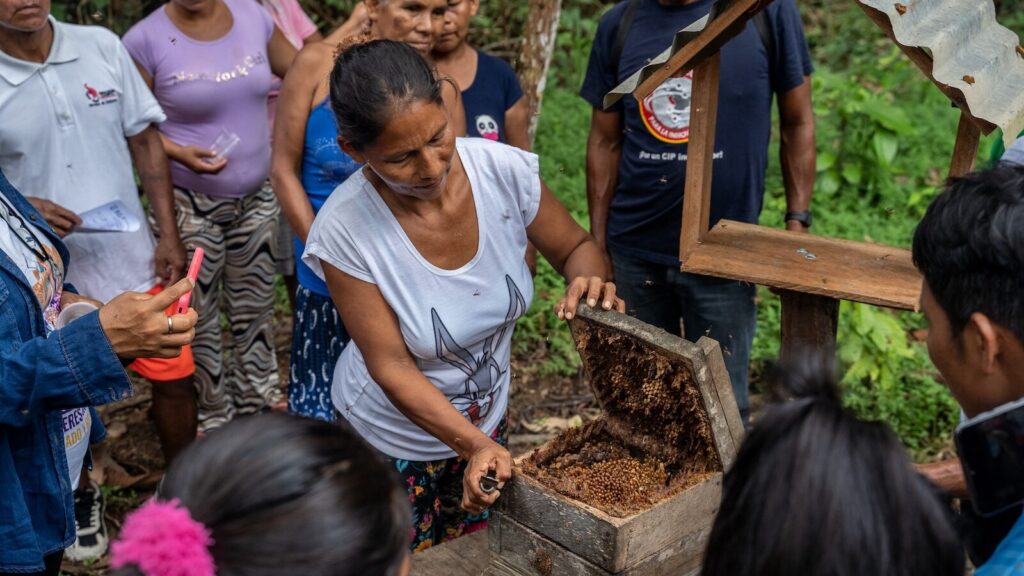
Stingless bees—small, native pollinators responsible for up to 90% of Amazon pollination—are
vital to the survival of rainforest ecosystems. Along Peru’s Napo River, Indigenous Kichwa and Maijuna communities are protecting these bees while revitalizing ancestral knowledge systems.
The Maijuna people of the Napo River have practiced meliponiculture, the care of stingless bees, for generations. They are now sharing that experience through a knowledge exchange with Kichwa communities. Supported by RFUS and partner organizations, the project is an important strategy for strengthening food security and knowledge transfer.
Through hands-on training programs like the “Little Bees School,” Indigenous leaders conduct sustainable beekeeping workshops, while elders impart traditional knowledge about the healing properties of honey. With a total of 45 families and 60 beehives currently involved, the project continues to expand as Kichwa participants bring their new knowledge home.
Before, we only consumed their honey, but now we have learned to better care for the bees themselves. With the support of the Maijuna, we have learned how to bring the bees from the forest to our homes, when to harvest the honey, and how to protect the bees from insects that could harm them.
– Luis Apagüeño, Forest monitor from Santa Elena, Tambor River, Maynas Province, Loreto, Peru
By supporting Indigenous-led livelihood initiatives like meliponiculture, RFUS helps strengthen local governance, food security, and the continuation of vital knowledge systems. As communities manage bees and their habitats, increased pollination supports forest regeneration and biodiversity. Read more.
Deepening Investment in Indigenous-Led Forest Protection in Brazil’s Yanomami Territory
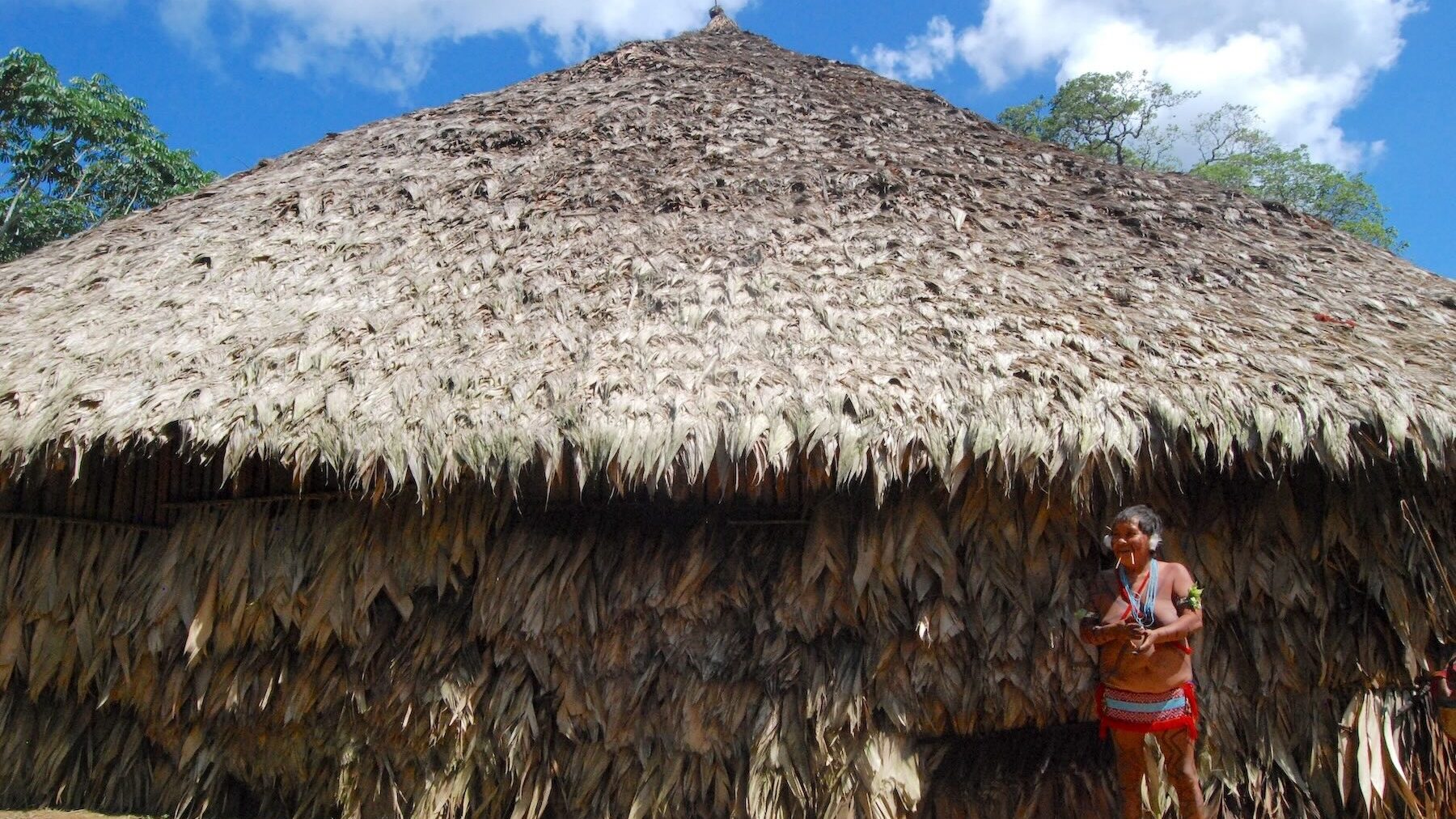
2026 marks three years since Brazil declared a public health emergency in Yanomami territory, driven by illegal gold mining and other compounding factors. Conditions have improved, but mining remains a constant pressure on communities, while malaria and food insecurity persist.
RFUS is expanding its regional support in response to these ongoing challenges. This includes assistance with a monitoring program managed by Wanasseduume Ye’kwana Association (SEDUUME), the representative organization of the Ye’kwana people in Brazil, who share the territory with the Yanomami. The program, similar to RFUS’s Rainforest Alert approach elsewhere, equips Indigenous community monitors with satellite technology and smartphones to detect illegal mining and logging early and respond more quickly on the ground.
RFUS is also increasing support to the Hutukara Yanomami Association to strengthen its legal department, advancing national and international legal action to defend Yanomami rights and safeguard their forests. Where these rights are upheld, communities are better able to protect their health, sustain cultural practices, govern their territories, and resist violence and illegal activity. Read more.
The situation in Yanomami territory has improved since 2023, but many challenges remain. Indigenous leaders have set the path forward—our responsibility is to ensure they have the support to carry it out.
– Christine Halvorson, Program Director at RFUS
How Indigenous Women in Guyana’s North Pakaraimas Are Organizing for Change
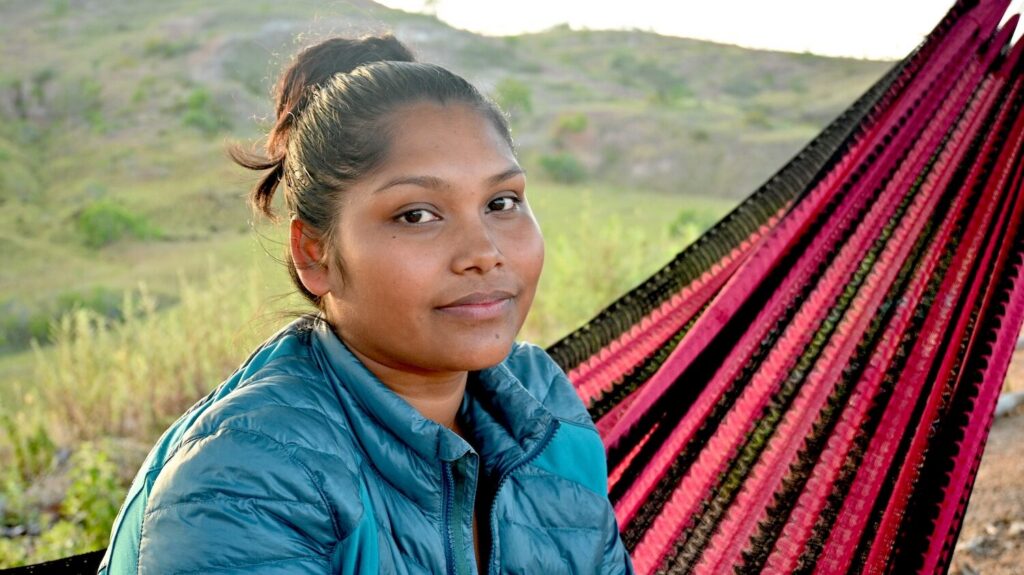
Indigenous women in Guyana’s North Pakaraimas are organizing to increase women’s representation in decision-making through Patamasan Protectors of I’na Pata (PPIP), a women-led organization. Led by chairperson Surujani Robinson, PPIP brings women together through workshops and advocacy to strengthen their participation in leadership, promote gender equality, and address gender-based violence. PPIP emerged from a 2023 regional conference and, with RFUS support, has since been recognized as an official Guyanese community organization.
My goal is to make it easier for the women—our young girls, our babies who are growing up—who are going to be our future leaders of tomorrow.
– Surujani Robinson, chairperson for the Patamasan Protectors of I’na Pata (PPIP)
For over 35 years, RFUS has worked alongside rainforest communities and seen that effective land stewardship depends on the distinct and complementary roles of women, men, elders, and youth, and that these groups do not share equal rights or decision-making power. Addressing these inequalities is essential to rainforest protection.
Gender and social inclusion work is not new to RFUS’s programs. RFUS has long supported Indigenous women’s participation in forest monitoring and their advocacy efforts on regional and international stages. RFUS has now formalized this approach through its new Gender and Social Inclusion Strategy, providing a clear, culturally-adapative framework to strengthen partners’ capacity to identify and address inclusion gaps, and remove barriers to women’s leadership. Read more.

This Earth Day, Our Planet is Counting on Us. Will you Act?
This Earth Day, we’re honoring the deep interconnectedness between people and the lands we inhabit. Indigenous peoples never lost sight of this, and today, rainforests managed by Indigenous peoples store more carbon and are often home to greater biodiversity than even state-managed forests.
Do you want to protect our planet now and for future generations? Join Treehouse, RFUS’s monthly giving community, to protect these crucial carbon sinks and fight the climate crisis.
Reliable monthly support is especially important for RFUS to sustain our work and stay responsive to the needs of our Indigenous partners. Your monthly gift provides our partners with the tools, training, and resources necessary to uphold their rights and keep their forests standing long into the future.
New Treehouse donors have a rare opportunity to double their impact. In honor of Earth Day, a generous donor is matching the first year—that’s 12 gifts—of all new recurring donations started before midnight on April 30!
Our planet is counting on us. Will you act? Have your first year of gifts matched today at https://rainforestfoundation.org/give/treehouse.