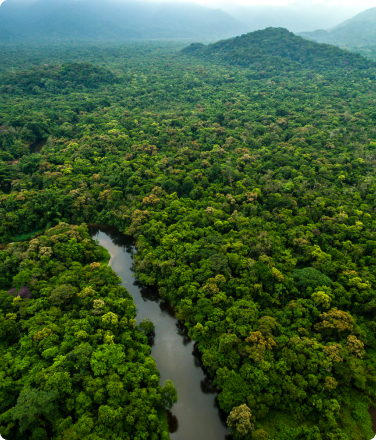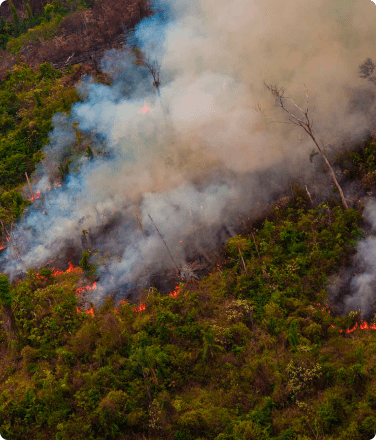
- Stingless bees are native to the Amazon and responsible for an estimated 38% to 90% of pollination in the region, depending on the ecosystem.
- A project supported by Rainforest Foundation US (RFUS) is facilitating knowledge exchange between Kichwa and Maijuna communities to steward stingless bees for honey and medicinal use.
- Honey production supports sustainable livelihoods while protecting biodiversity.
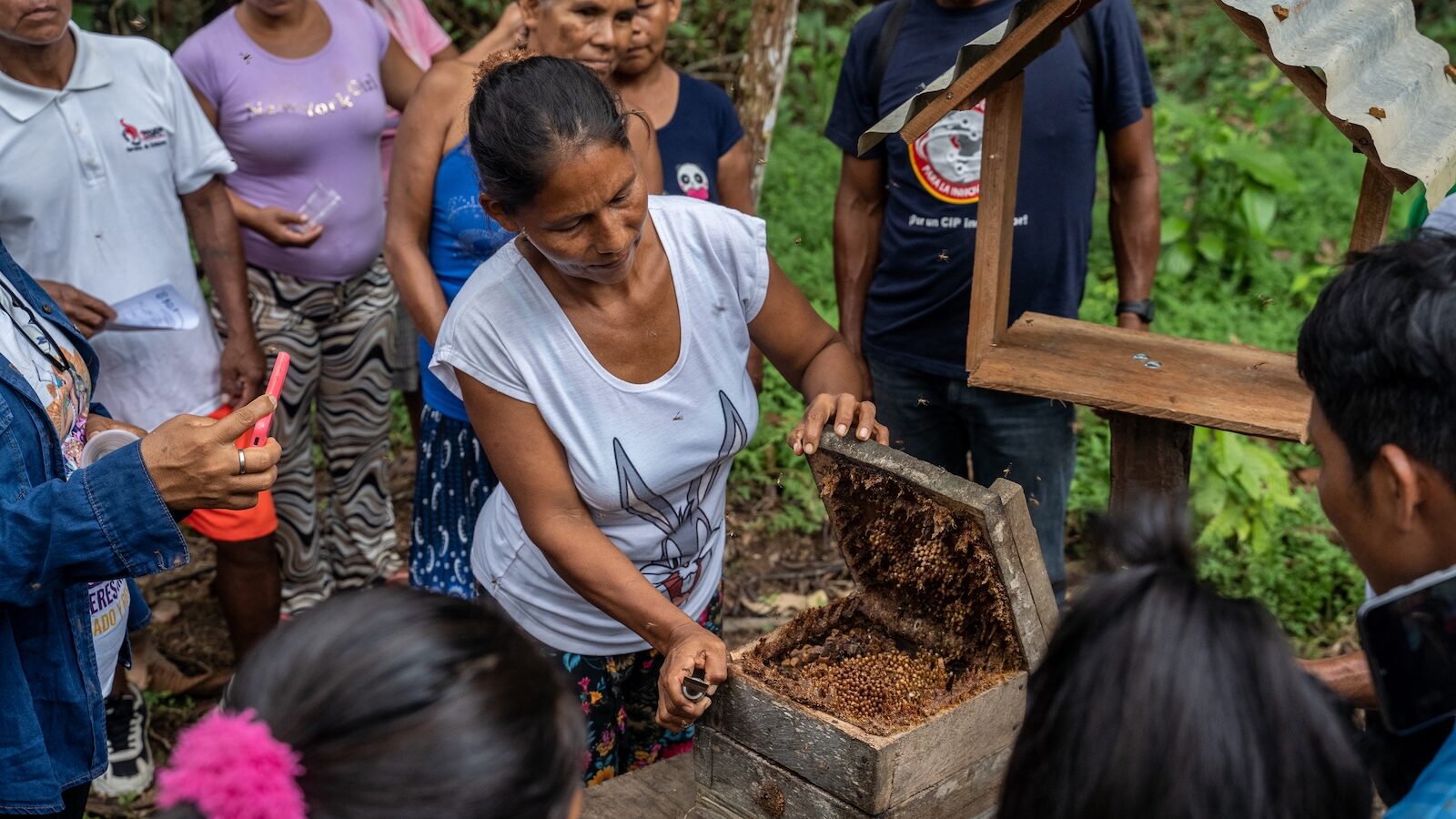
Along the Napo River in Peru’s Amazon, Indigenous Kichwa communities are reviving traditional knowledge to care for Amazonian stingless native bees as part of a project focused on sustainable livelihoods and forest stewardship. Using hollowed logs and wooden boxes, families manage bee nests that support food security, provide medicinal honey, and contribute to the health of the surrounding forest.
The Maijuna people of the Napo River have practiced meliponiculture, the care of stingless native bees, for generations. Residents of Nueva Vida community are now sharing that experience through a knowledge exchange with Kichwa communities in the region. Supported by Rainforest Foundation US, the Organization of the Indigenous Peoples of the Eastern Amazon (ORPIO), and One Planet, with funding from the International Union for Conservation of Nature (IUCN) and the Danish International Development Agency (Danida), the project is an important strategy for strengthening food security and knowledge transfer.
The Little Bees School
For the Maijuna, bees have long been a part of everyday life; tied to food, medicine, and cultural practices. Now, through the “Escuela las Abejitas” or the “Little Bees School,” this knowledge is being shared along the Napo River basin. Bringing together dozens of participants, the school is led by Maijuna beekeepers who lead hands-on training sessions covering everything from hive installation to honey harvesting. Community elders also impart traditional knowledge about the healing properties and uses of honey.
It’s important to care for the bees to improve our lives and to keep caring for them for the good of our families and our whole community. That way, we can also earn income that benefits everyone.
– Silda Dahua, Apu of the Vista Hermosa Community, Tambor River, in Maynas Province, Loreto
With a total of 45 families and 60 beehives currently involved, the project continues to expand as Kichwa participants bring their new knowledge home and invite youth and children to get involved.
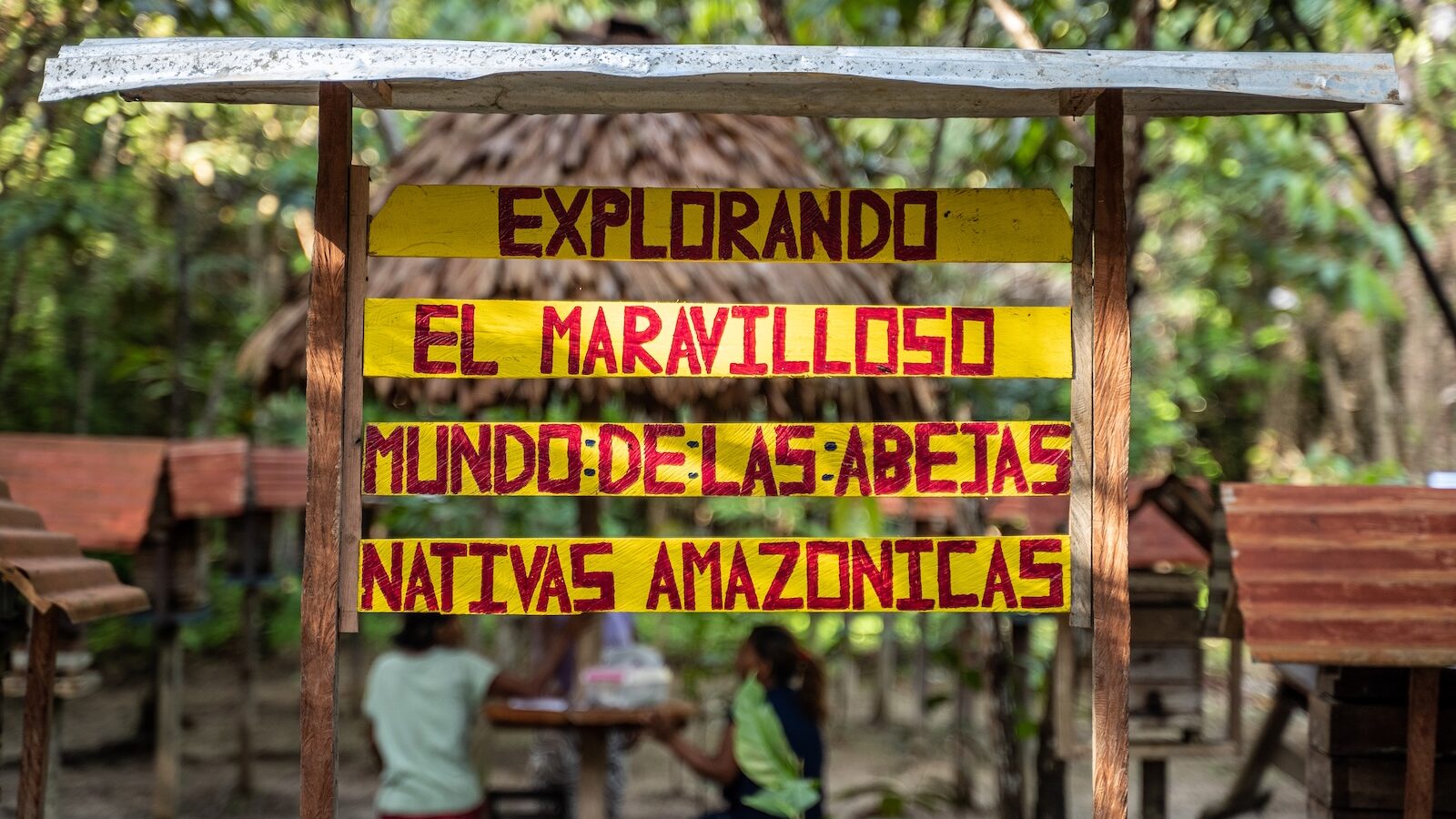
It is fascinating to learn how families within these communities are growing this initiative and sharing their knowledge with others, strengthening cultural exchanges between the Maijuna and Kichwa peoples. Together, through beekeeping, they are building sustainable economic alternatives by selling honey and other bee-based products at local markets, all while protecting the forest and biodiversity.
– Gina Ruiz-Caro, Western Amazon Director at Rainforest Foundation US Peru
Why Stingless Bees Matter
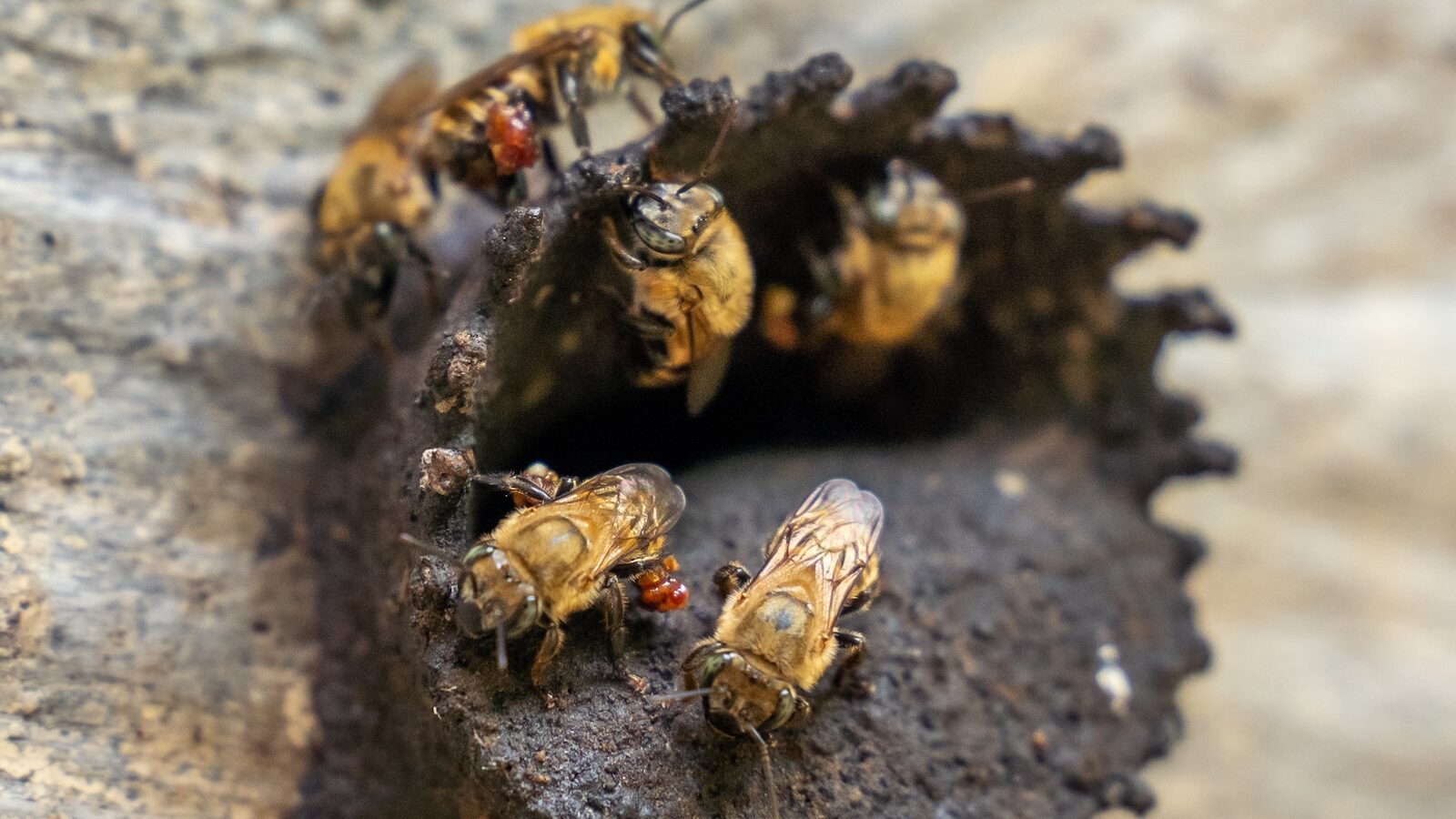
Stingless bees are native to the Amazon, and that makes them essential. Having co-evolved with native vegetation, they are among the most effective pollinators of tropical forests and are responsible for an estimated 38% to 90% of pollination across the Amazon1, depending on the ecosystem. Crops such as cacao and coffee, as well as many medicinal plants, depend on them.
As forests are lost and landscapes become fragmented, these bees face growing pressure—from pesticide contamination to climate change and competition from invasive species. Communities along the Napo River have noticed these changes firsthand, observing that bees are increasingly harder to find where they once thrived close to home.
The First Insects With Legal Rights
In 2025, the Peruvian Amazon municipalities of Satipo and Nauta passed ordinances recognizing native stingless bees as rights-bearing beings with the right to exist and thrive in a healthy environment—the first legal rights protection for insects anywhere in the world. The decision reflects what Indigenous communities have long understood: protecting bees is inseparable from protecting the forest itself.2
A Sweet Milestone
In March 2026, the project is expected to hold its first honey harvest. A small gathering is planned to bring together community members, donors, and partners to celebrate the work behind each jar of honey.
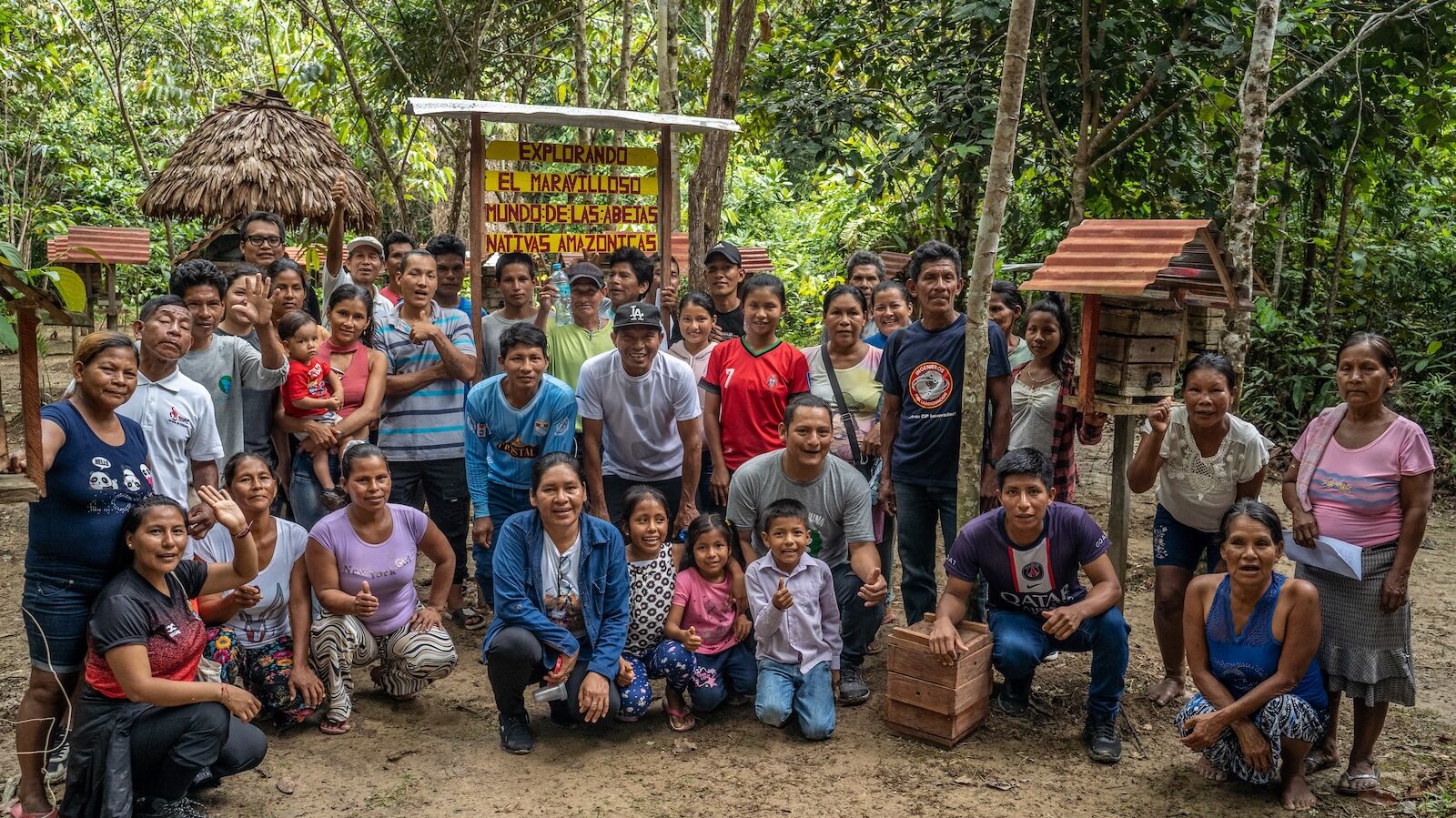
Before, we only consumed the honey, but now we have learned to better care for [the bees] through workshops and training. With the support of the Maijuna, we have learned how to bring the bees from the forest to our homes, when to harvest, and how to protect the bees from insects that could harm them.
– Luis Apagüeño, Forest monitor from Santa Elena Community, Tambor River, in Maynas Province, Loreto
Behind each new hive is a family learning to care for it—children taking on new responsibilities, parents and elders sharing knowledge about the many uses of honey, and entrepreneurial community members keeping an eye on local demand. Together, the hives create new sustainable income opportunities while supporting biodiversity and fostering cross-cultural knowledge exchange.
The initiative is expected to expand in 2026, with additional support planned for wild-harvested Brazil nuts, cacao and other forest products in the Northern Brazilian Amazon.
By supporting Indigenous-led initiatives like meliponiculture, RFUS helps strengthen community governance, local decision-making, and sustainable livelihoods. This work reinforces food security while protecting biodiversity, safeguarding forests, and keeping cultures strong.
Sources:
- Camino Verde. Up Close with the Native Bees of the Peruvian Amazon. May 2023. ↩︎
- The Guardian. Stingless bees from the Amazon granted legal rights in world first . December 2025. ↩︎