A Proven Strategy for Durable Rainforest Protection
Since 1988, Rainforest Foundation US has partnered with Indigenous organizations to advance land rights across millions of acres in Central and South America.
Our Impact
43 Million
43 million acres of Indigenous land secured across Central and South America
200+
RFUS has supported strengthening land tenure security for over 200 Indigenous communities
8-18 Months
Reduced land titling process time down from years to 8-18 months through the SI-TIERRA initiative
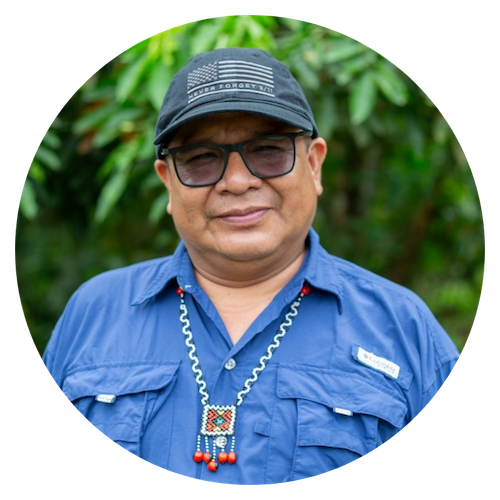
“For decades, in many regions of the Amazon, we have protected our territories and forests without the necessary legal backing. Titling means securing our future, defending our forest, and keeping alive the relationship we have always had with our ancestral lands.”
— Jorge Pérez Rubio, Indigenous Huitoto leader and president of the Interethnic Association for the Development of the Peruvian Rainforest (AIDESEP)
Why Land Rights Matter
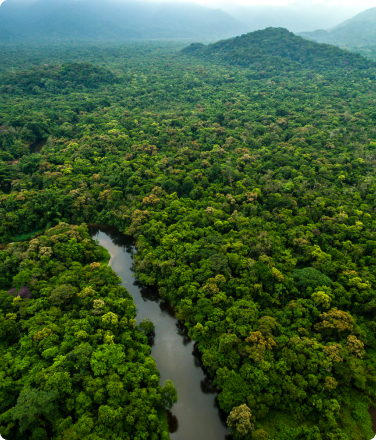
Indigenous peoples’ territories contain over one-third of the world’s intact forests and provide habitat for 60% of terrestrial mammal species. Where Indigenous peoples hold secure land rights, forests and biodiversity are significantly better protected.
In Central and South America, deforestation rates are as much as 50% lower in Indigenous territories. In Brazil, land titling was associated with a 66% decrease in deforestation. In the Peruvian Amazon, titling reduced forest clearing by roughly 75% within two years. Beyond protecting forests, formal land rights strengthen food security, climate resilience, and local governance, making legal recognition of Indigenous territories one of the most effective, long-term, cost-efficient, just and equitable strategies for conserving biodiversity and addressing climate change.
The Struggle for Legal Recognition
International law recognizes Indigenous peoples’ rights to their traditional lands and resources, yet many governments still fail to offer the same legal recognition. In many countries, Indigenous communities must spend years navigating complex legal and administrative processes to secure legal recognition of lands they have stewarded for generations. Even after territories are legally recognized, enforcement remains a persistent challenge, as illegal logging, mining, and land grabbing for agricultural expansion continue to threaten Indigenous lands.
Defending these territories can be deadly. In 2024, at least 146 Indigenous land defenders were killed or disappeared in conflicts tied to land disputes, and many were linked to industries such as mining, logging and agribusiness. More than 80% of those attacks occurred in Latin America.
By the Numbers:
11 billion acres—Estimated land held or used by Indigenous peoples & local communities worldwide
Advancing Land Rights Across South and Central America
RFUS aims to support partners to advance land rights across nearly 14 million additional acres by 2030, focusing on priority landscapes in Peru, Ecuador, Brazil, Guyana, Honduras, and Guatemala.
RFUS partners with Indigenous organizations to secure and protect their lands through legal support, participatory mapping, technical assistance, and strategic advocacy. Where legal recognition is not yet possible, we strengthen community-led governance and monitoring to help protect territories while advancing long-term land claims.
“The gold standard for rainforest protection is securing Indigenous’ land rights through formal titling. However, the political climate of certain countries is not always amenable. The next best approach involves supporting a robust land management plan paired with an extensive monitoring program, while strengthening Indigenous organizations so they are better equipped to defend their territories and advocate for their rights over the long term.”
— Cameron Ellis, Field Science Director, RFUS
How We Work:
Legal Support
RFUS provides legal expertise and long-term accompaniment to Indigenous organizations pursuing new or expanded land claims, while helping defend territories whose rights have already been formally recognized.
Participatory Mapping
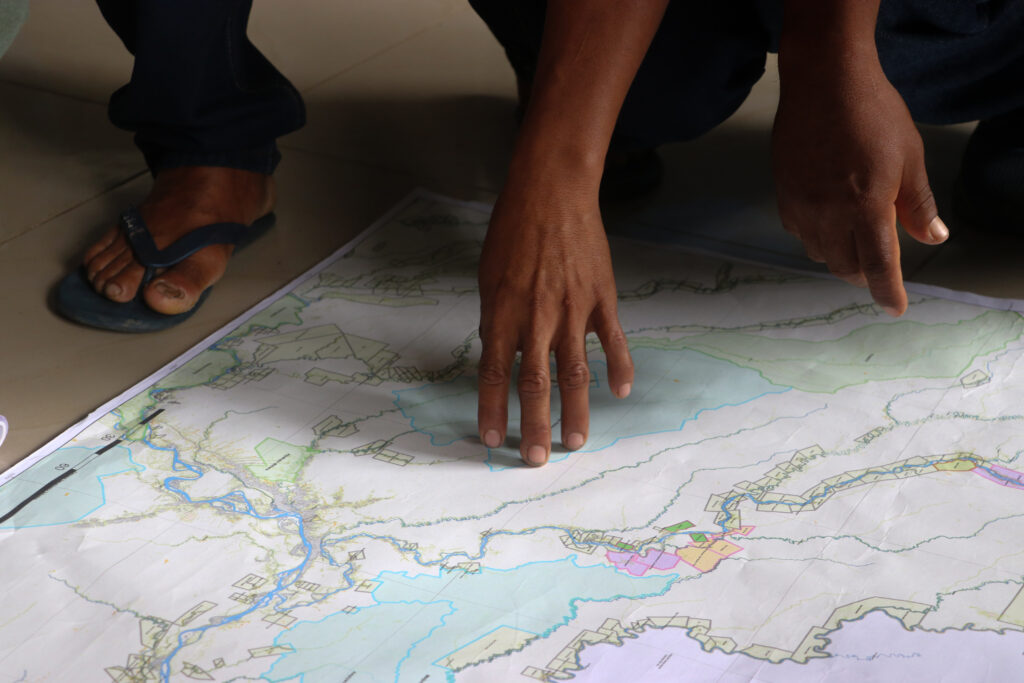
We support community-led mapping and territorial documentation to strengthen land claims, clarify boundaries, and generate the evidence needed for legal recognition and territorial defense.
Advocacy and Policy Change
RFUS works with partners to develop evidence-based strategies that influence public policy, strengthen legal frameworks, and remove barriers to recognizing Indigenous land rights.
Alliances and Coalitions
We help build partnerships among Indigenous organizations, governments, donors, and civil society to strengthen coordinated advocacy and advance land rights at local, national, and international levels.
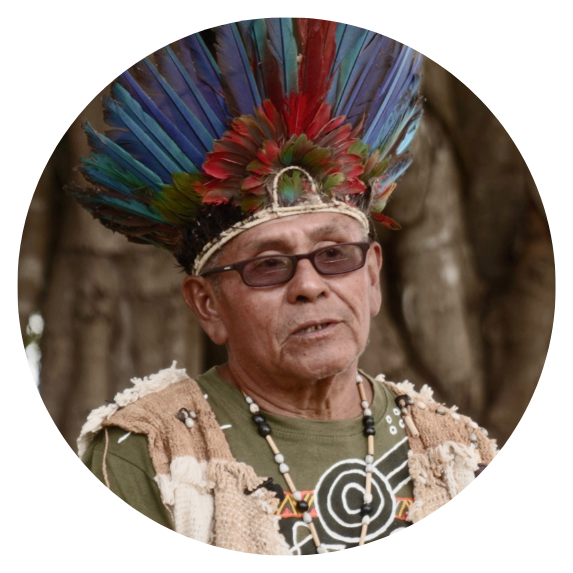
“The collective ownership of our land is paramount to the protection of our forests.”
— Tony James, late Chief and Wapichan leader from Guyana
Discover the fascinating secrets of the Amazon! Our new Kids’ Corner is full of new games, activities, and learning materials to help kids explore the rainforest—and see how they can help protect it.