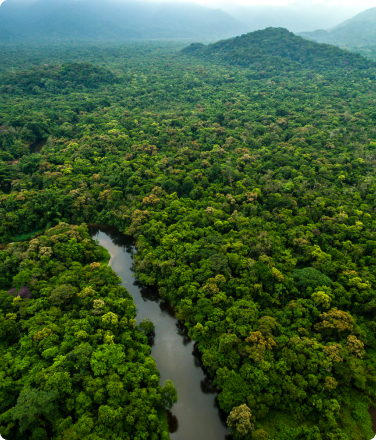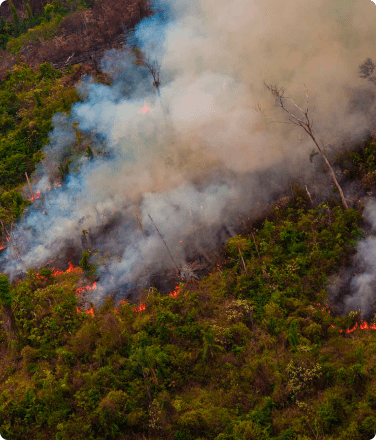
- The Climate Adaptation and Resilience Exchange held in Roraima, Brazil from May 11-16 brought together Peruvian and Brazilian Indigenous delegations to share approaches to territorial fire management and climate resilience.
- As climate change increases fire intensity in the Amazon, communities are adapting response strategies and increasing community preparedness ahead of each dry season.
- For Indigenous peoples, strong territorial governance is the foundation of climate resilience.
When record-breaking fires tore through the Peruvian Amazon in 2024, affecting 22 of the country’s 24 regions, it was a wake-up call for the Ticuna community of Buen Jardín de Callaru. For generations, Peru’s Ticuna people have lived in the region’s humid lowland forests, where small, controlled fires have long been part of preparing family farms and gardens. But the fires of 2024 were something else entirely. After a year of severe drought fueled by deforestation and the climate crisis, vast, uncontrolled blazes were spreading through an ecosystem ill-equipped to withstand them—and what had once been manageable had become unthinkable.
We need to prepare ourselves. We don’t want to keep facing these fires without being ready.
– Luz Ayambo, Ticuna land monitor
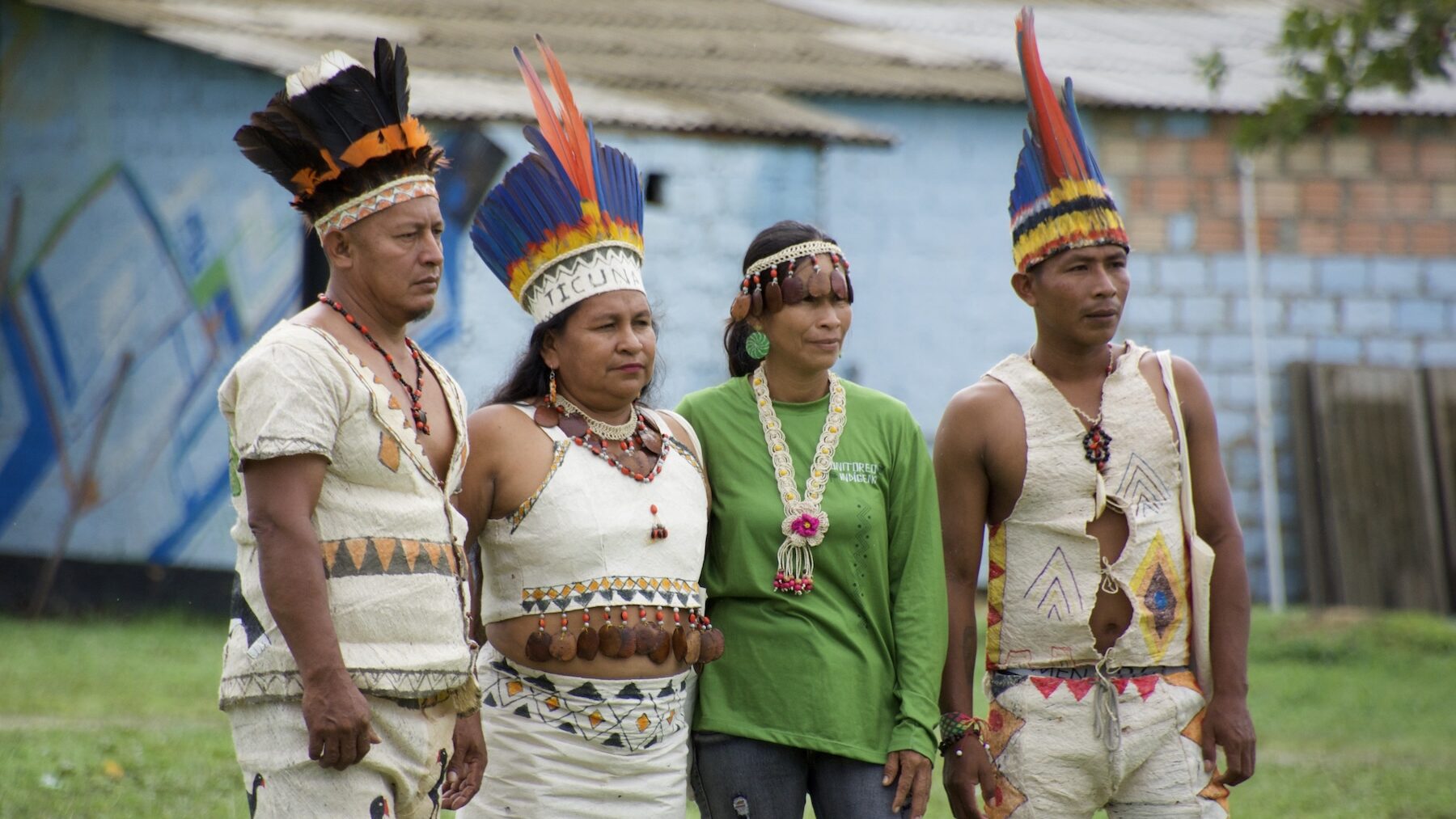
“We need to prepare ourselves,” thought Luz Ayambo, a Ticuna land monitor who witnessed the devastation firsthand. “We don’t want to keep facing these fires without being ready.”
Luz was not alone in this thinking. Across the Peruvian Amazon, Indigenous communities are grappling with environmental conditions unlike those previous generations experienced. Dry seasons are becoming longer and more intense, water sources are less reliable, and fires are behaving in ways that many communities have never experienced before.
As climate change reshapes the Amazon, Indigenous peoples are seeking new tools and strategies to help adapt to a rapidly changing landscape while continuing to draw on their deep knowledge of their territories.
To find answers, Luz and others in her community began to look east to a very different part of the Amazon—Brazil’s northernmost state of Roraima, where vast savannahs known as the lavrado stretch between patches of rainforest. Unlike the humid lowlands of Peru, these ecosystems have long coexisted with fire, and the peoples of the lavrado, such as the Wapichana and Macuxi, have generations of experience managing its risks and ecological benefits.
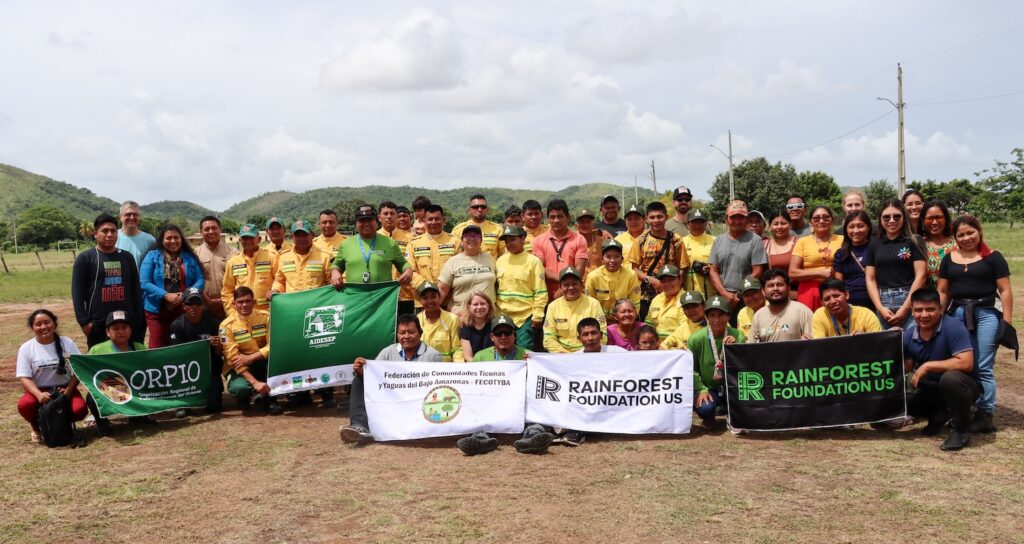
That is why Luz, along with Indigenous youth leaders and territorial monitors from the Federation of Ticuna and Yagua Communities of the Lower Amazon (FECOTYBA), the Interethnic Association for the Development of the Peruvian Rainforest (AIDESEP), and the Organization of the Indigenous Peoples of the Amazon (ORPIO), traveled to Roraima for a week-long exchange in May.
Held from May 11-16 and organized by the Indigenous Council of Roraima (CIR) with support from Rainforest Foundation US (RFUS) and the Danish Development Agency (DANIDA), the Climate Adaptation and Resilience Exchange brought Indigenous representatives from Peru and Brazil together to share experiences and practical approaches to territorial fire management and climate resilience.
Building Strong Indigenous Governance
In order to properly defend their territories from disasters, Indigenous communities need secure land rights and strong organizations. Built over more than 50 years, CIR has become a leading example of Indigenous self-governance at scale. Its sustained advocacy has helped secure legal recognition for most of Roraima’s 35 Indigenous territories—spanning over 24.7 million acres (larger than the state of Indiana)—with four more currently in process.
With 54 staff members—80% of whom are Indigenous—the organization collectively represents nine Indigenous peoples, 272 communities, and over 70,000 people.
During the exchange, the Peru delegation heard from the organization’s top leaders, or tuxauas, about how they structure their governance and build climate resilience.
They were also invited into CIR’s “Situation Room,” a fully-equipped geospatial monitoring center where staff use real-time satellite monitoring to track threats such as illegal logging and mining across Indigenous territories and coordinate targeted responses. Using an AI-powered satellite system called Pantera, monitors have incorporated weather and fire alerts complemented by drone cameras that pinpoint the exact location of fires.
For over 20 years, RFUS has supported CIR to strengthen Indigenous governance in Roraima. This has included strengthening internal regulations, free prior and informed consent (FPIC) protocols, and Environmental and Territorial Management Plans (PGTA), while training a network of community Territorial and Environmental Agents to monitor and increasingly, manage wildfire risk.
Learning to Live with Fire
Indigenous peoples in Roraima have long used and managed “good fire” to replenish soils, repel pests, and maintain ecosystems. But climate change and deforestation are altering how fire behaves across the landscape. Longer and more intense droughts are causing fires to burn hotter, spread farther, and become more difficult to control, forcing communities to adapt long-standing practices. In 2024 alone, the state recorded over 4,000 fire outbreaks in just three months, according to WWF Brazil.
According to a report by Instituto Socioambiental, over 87% of recorded fire hotspots in Brazil in 2024 were outside Indigenous territories. Even so, many Indigenous communities bore the brunt of the crisis, with fire damaging their crops, animals, and homes.
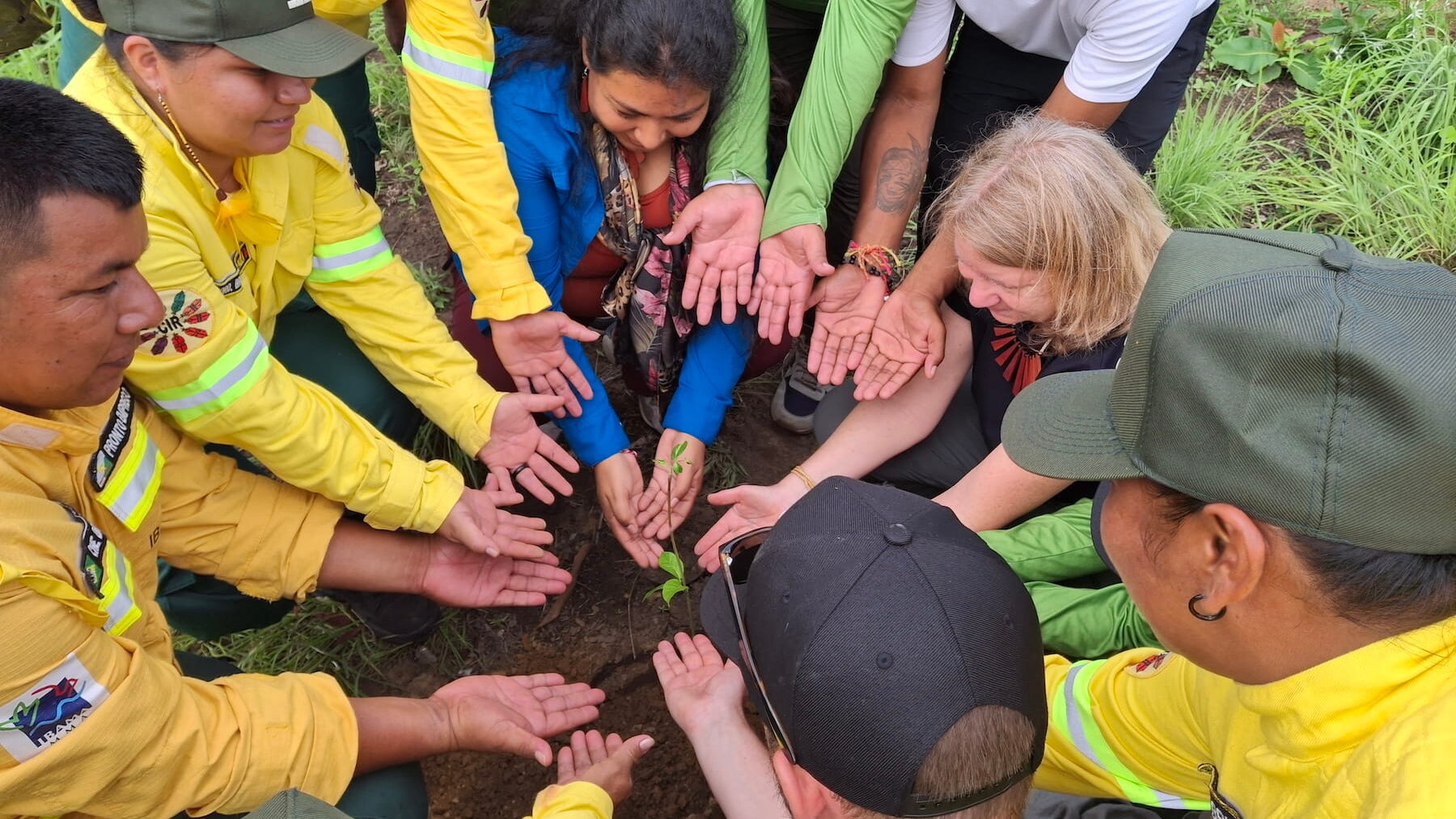
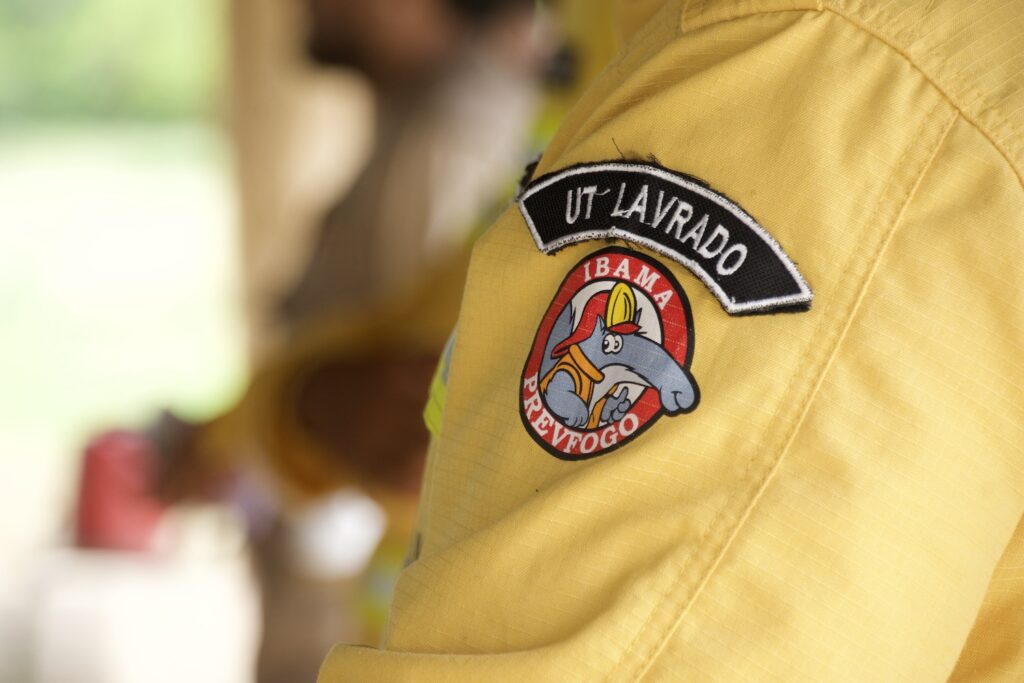
In response, communities in Roraima have developed complementary approaches to fire management. Alongside government-led firefighting brigades, CIR has established its own network of Indigenous brigades—including one all-women brigade—that focus not only on responding to fires, but on preventing them. Their work includes environmental education, culturally-grounded fire prevention, communal nursery planting parties, and community preparedness ahead of each dry season.

Expanding Indigenous-Led Climate Adaptation
CIR’s approach to climate resilience extends well beyond fire. To address a wider range of climate impacts, the organization has facilitated four Indigenous Adaptation Plans, with a fifth in development. Drawing on generations of ecological knowledge, communities in Raposa Serra do Sol have created climate-informed cultural-ecological calendars, contingency plans, and long-term strategies for an evolving landscape.
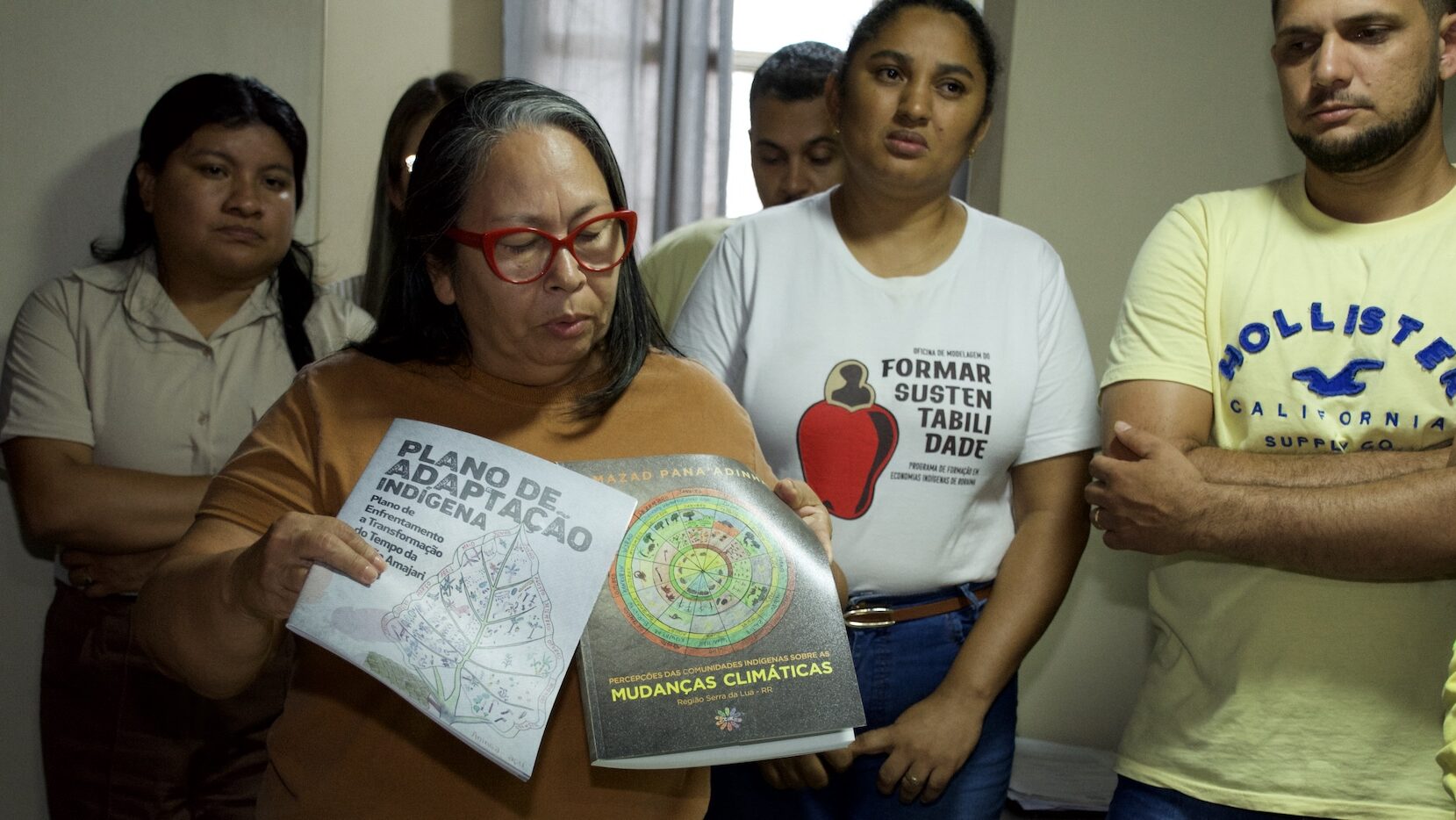
Ensuring the next generation can carry these plans forward is equally central to CIR’s work. Through its Indigenous Center for Education and Culture, more than 100 youth have received training in agricultural skills, leadership, and cultural knowledge. And when fire brigaiders, or brigadistas, head out to plant community gardens, they bring their children, passing down both practical skills and the deeper meanings beneath them.
We can’t just wait for crises to happen. We have to prepare, to get our gardens ready. We need [Indigenous adaptation plans], because without them the plans will be coming from above, and from outside our territories.
– Sineia Wapichana, coordinator of CIR’s Territorial and Environmental Management and Climate Change Department.
“We can’t just wait for crises to happen,” said Sineia Wapichana, coordinator of CIR’s Territorial and Environmental Management and Climate Change Department. “We have to prepare, to get our gardens ready. We need [Indigenous adaptation plans], because without them the plans will be coming from above, and from outside our territories.”
Sineia also emphasized the importance of Indigenous-to-Indigenous learning: “Indigenous peoples don’t have borders, we have relatives across countries.”
What Comes Next: Lessons Carried Home
For the Peruvian participants, the exchange marked a starting point. As fires continue to encroach further into their rainforests, a clear through-line emerged: effective fire management depends on strong institutions, not just firefighting capacity.
For the FECOTYBA and Ticuna delegations, that means strengthening organizational governance as the foundation for everything else—fire preparedness, climate adaptation, and youth leadership. They left with a concrete agenda: deepen youth involvement, cultivate strategic alliances, and prepare for the dry season before crisis strikes.
For ORPIO and AIDESEP, the exchange highlighted new opportunities to build on their existing network of territorial monitors, trainers, and community leaders. Integrating fire data into existing monitoring systems, and drawing on tools like CIR’s Pantera platform, are the logical next steps.
These kinds of exchanges allow us to learn about other realities and also the strategies being implemented elsewhere to address the major problems facing the Amazon. The experience of the Roraima [fire] brigades is a process with significant challenges, but it is a clear example that Indigenous peoples and their representative organizations are capable of leading these kinds of initiatives from their territories.
– Stephany Cadenillas, Institutional Communications Officer, AIDESEP
Both groups left with an interest in formalizing the relationship with CIR through future learning exchanges, scholarships, and potentially an institutional agreement. They also recognized that building climate resilience depends not only on drawing up management plans, but on building the alliances and resources needed to sustain them.
Indigenous communities of the Peruvian Amazon are not starting from zero—they have their own knowledge, their own monitors, and now, new peers they can call on. “Maybe we cannot get all the way up the hill with our water pumps completely full right now,” said Lloyd Manuyama, a Ticuna youth filmmaker who participated in the exchange, “but if we start collectively from the bottom, we will absolutely be able to get there.”