By Suzanne Pelletier, Executive Director at Rainforest Foundation US (RFUS)
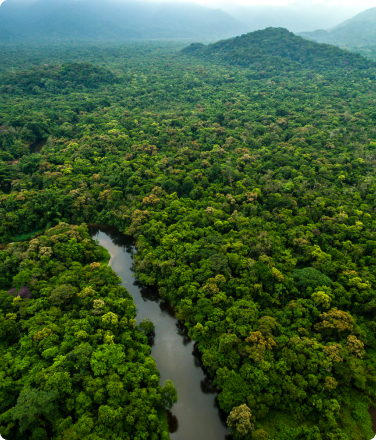
When we hear the word infrastructure, we might picture bridges, power grids, and other public works that support our daily lives. Yet some of the infrastructure most essential to life on Earth is living, and all the more vulnerable for it. Tropical forests regulate our climate, move water across continents, and provide habitat for an extraordinary share of the planet’s biodiversity. They took shape over millions of years, and Indigenous peoples have sustained them for generations.
Protecting these forests depends on another form of living infrastructure: the organizations and alliances Indigenous peoples and local communities have built to govern and defend the forest territories they call home. Secure land rights, strong Indigenous institutions, and community-led forest management make protection possible across vast territories. Yet governments and philanthropy provide nowhere near the funding the climate crisis demands.
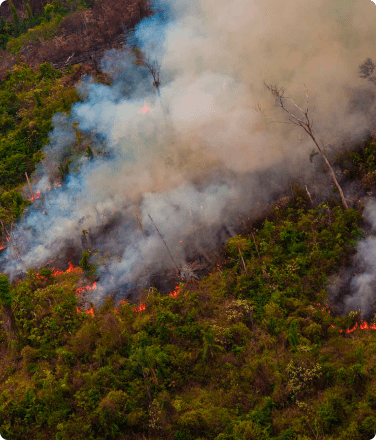
Today, climate and Indigenous rights are still financed as separate agendas, as though stewarding forests and supporting the people who live in them were different work. This is a false and costly split, and we are running out of time to get it right. Scientists are warning of a potentially historic “super” El Niño this year. The drought and fire it may bring could push vast areas of the Amazon closer to a tipping point from which they may never recover.
This moment calls for an honest accounting of what decades of experience protecting forests have taught us about what works, what we must leave behind, and what we must build now to meet this crisis with the urgency it demands.
What We Must Leave Behind
Over 40 years of working alongside Indigenous peoples at Rainforest Foundation US (RFUS), we have watched governments, funders, and conservation institutions return again and again to approaches that fall short: Parks created without recognizing the rights of those who have long cared for those lands; tree-planting campaigns treated as a substitute for restoring biodiverse forests, securing land tenure, and confronting the forces driving forest loss; and small, piecemeal projects that merely displace illegal extraction from one commodity or place to another.
These approaches take different forms, but they share a fundamental mistake — they treat forests as separable from the people who live in and steward them. Indigenous peoples end up cast as a threat to conservation at worst, and as stakeholders to be consulted at best. Rarely are they treated as rights-holders whose knowledge, priorities, and leadership should shape forest protection from the start.
What We Must Sustain
Forests stewarded by Indigenous peoples largely match or outperform every other conservation model in preventing deforestation, including national parks. Over 30 years, titled Indigenous lands in Brazil saw 66% less deforestation than untitled lands; in the Peruvian Amazon, titling reduced forest clearing by roughly 75% within two years.
We do not need more data to tell us that Indigenous peoples are effective forest stewards. We need funders, governments and NGOs to act on the evidence already before them. That requires more than offering Indigenous peoples a seat at the table. It requires rebuilding the table entirely to shift decision-making power and the money that follows. This is not a “nice to have.” It is a prerequisite for effective forest protection that lasts.
At RFUS, we help build the field of Indigenous-led forest protection by strengthening representative organizations that work alongside, and are accountable to, vast networks of Indigenous communities. We invest in their governance and internal systems while supporting coalitions of similar organizations and allies working across borders and territories. These connections allow them to share knowledge, coordinate their efforts, and respond to threats at the scale at which they operate.
What We Must Build
Indigenous peoples and local communities currently receive less than 1% of international climate finance — a stunning gap that reveals a systematic failure in how money moves.
While securing formal titles for Indigenous communities remains one of the strongest methods of forest protection available, the work of protection continues whether recognition has been secured yet or not. Monitors must patrol vast areas and document invasions, leaders must press public agencies and international bodies to act on environmental crimes and rights violations, and staff are needed at Indigenous-led organizations to keep the entire operation running. This is the ongoing maintenance required for the functioning of tropical forests as climate infrastructure. It is the difference between a system that works and a system that fails, and it needs a new funding model.
Many effective Indigenous organizations are ineligible for large direct grants to support this long term work because they do not meet conventional donor requirements such as audited financials, English-language reporting, or a track record of managing grants of a comparable size. Building the field means widening the pool of organizations that can receive funding directly. This includes investing in the governance and administrative systems that Indigenous organizations identify as important, while supporting Indigenous-led territorial funds that can channel larger flows of money to local projects.
How We Can Meet the Moment
At RFUS, we have held the same core conviction since our founding in 1988: Indigenous rights and forest protection advance together, not in sequence. By 2030, we aim to advance land rights across 14 million acres, extend community-led protection across 91 million acres, and strengthen 67 Indigenous organizations.
But the Amazon is losing forest faster than the funding systems are adapting. If tropical forests are living climate infrastructure, so too are the Indigenous institutions, land rights, and systems of territorial protection that keep them standing. Our task now is to build that field together, backed by long-term, flexible funding that strengthens Indigenous organizations and enables communities to govern and defend their territories for generations.