FOR IMMEDIATE RELEASE
Indigenous-led model in Peru’s Loreto region reduces timelines and strengthens coordination across the land titling process.
Lima, Peru / New York, U.S., June 15, 2026 — A new report from Rainforest Foundation US (RFUS) and the Inter-Ethnic Association for the Development of the Peruvian Rainforest (AIDESEP) finds that an Indigenous-led, collaborative approach is significantly accelerating the legal recognition of Indigenous territories in the Peruvian Amazon.
While structural challenges remain, the report shows that coordinated, field-based implementation, paired with strengthened collaboration between Indigenous organizations and regional governments, can reduce timelines and costs associated with improved outcomes for communities and forest protection.
A critical gap in land tenure security
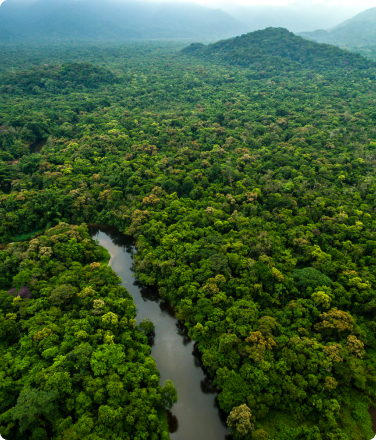
Secure land tenure is widely recognized as one of the most effective strategies for forest protection. Research shows that forests managed by Indigenous peoples have lower deforestation rates, store more carbon, sustain greater biodiversity, and have stronger governance systems.
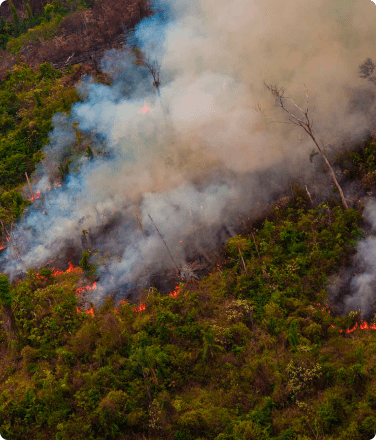
Across the Peruvian Amazon, an estimated 20 million hectares of Indigenous peoples’ lands remain without full legal security—an area larger than the state of Washington. Loreto, the region highlighted in this report, is the largest province in the Peruvian Amazon and a major center of this land-tenure gap, making it one of the most critical regions for advancing land tenure security in Peru.
An Indigenous-led model to accelerate titling
In response to these persistent gaps, AIDESEP—Peru’s national Amazonian Indigenous organization—has led the development of SI-TIERRA, an integrated land titling initiative implemented in partnership with RFUS.
The model takes a field-based, end-to-end approach to the land tenure process, accompanying communities from initial demarcation and geo-referencing to final registration. By identifying bottlenecks early and working directly with communities and government agencies, SI-TIERRA addresses delays that have historically slowed progress.
Since 2023, the initiative has advanced land tenure security for more than 40 Indigenous communities, covering over 77,000 hectares—an area slightly larger than the city of Chicago. Processing timelines have been reduced from several years to approximately 8–18 months, setting a new benchmark in comparison to other land tenure projects.
Strengthening Indigenous leadership and local institutions
A key factor behind these results is the model’s ability to work across multiple stages of the process simultaneously while improving coordination between Indigenous organizations and public institutions.
This approach has not only increased efficiency and reduced delays but also strengthened the institutional capacity of Indigenous organizations to lead and sustain land tenure processes over time.
“For Indigenous peoples, land is not a commodity. It is the foundation of our identity, our culture, and our lives. Securing our territorial rights is essential to protecting our peoples and the forests we defend. In Loreto, we have shown that when Indigenous organizations and regional authorities work together, it is possible to move forward. This experience must now be sustained and expanded,” said Jorge Pérez Rubio, president of AIDESEP.
“The experience in Loreto shows how Indigenous leadership and sustained coordination can strengthen land tenure processes on the ground. Protecting tropical forests is one of the most effective tools we have to address the climate crisis, yet funding for forest protection still falls far short of what is needed. When these elements come together, we can deliver faster, more cost-effective results for forests, communities, and the climate,” said Suzanne Pelletier, executive director of Rainforest Foundation US.
Scaling what works
Approximately 700 Indigenous communities in Peru’s Amazon are still awaiting land tenure security. The report outlines practical steps to accelerate progress, presenting an approach that delivers faster, lower-cost, and more consistent outcomes for both communities and forest protection.
The Executive Summary and the full report, Securing the Amazon: Indigenous Land Tenure and Forest Protection in Peru, are available here. A photo gallery is available here.
For interview requests or media inquiries, please contact: Kim Chaix
[email protected] | Phone: +1 (917) 378-8670