- Favorable weather in 2025 masked the underlying pressures still driving fire and deforestation across the Amazon.
- Sustained public investment in community fire management, especially in Indigenous territories, can contribute to increased climate resilience.
- With a “super” El Niño forecast in 2026, preparedness ahead of the dry season is more urgent than ever.
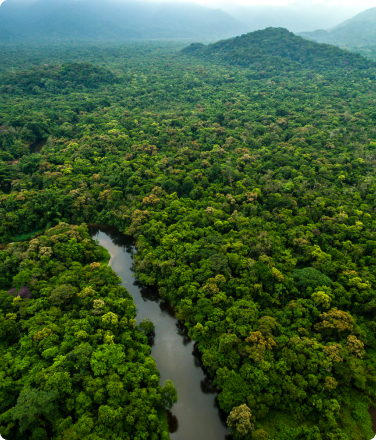
In 2025, the Amazon finally got some reprieve from the worst fires in its recorded history. According to the satellite-monitoring network MapBiomas’ Annual Report, roughly 7.7 million acres of the Brazilian Amazon burned last year — the smallest area since record-keeping began in 1985, and about 80% less than the nearly 40 million acres that burned in 2024. Additionally, after two straight years of drought, water coverage across the Amazon basin rose about 2.6% above the historical average in 2025.
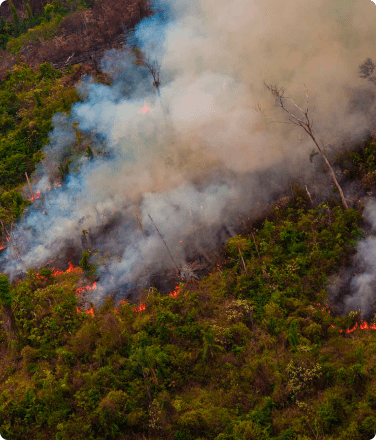
It’s a genuinely dramatic reversal. In 2024, fires devastated a combined area larger than the state of Florida in the Brazilian Amazon alone, driven by the worst drought in decades and fueled by El Niño. Fires became, for the first time on record, the leading cause of primary forest loss in the region.
According to a 2024 report by Brazil’s Instituto Socioambiental (ISA), more than 87% of recorded fire hotspots in Brazil were outside Indigenous territories. Meanwhile, real-time satellite data from Global Forest Watch (GFW) frequently shows fire stopping at the perimeter of Indigenous territories. This may be linked to the strength of community monitoring efforts and Indigenous firefighting brigades, while emphasizing the importance of secure land rights.
The 2024 crisis was not confined to Brazil. In Bolivia, fires scorched an additional 2.47 million acres of Amazon rainforest, fueled largely by agricultural expansion — a nearly 114% increase over the previous record set in 2019. Peru also endured its worst fire season on record, with most of the destruction occurring in primary forests. Venezuela, Colombia, Ecuador, and Guyana also reported major surges in fires.
The significant decline in 2025 across the region was primarily thanks to the end of El Niño-related drought and an increase in firefighting efforts across the Brazilian Amazon. Yet this progress is fragile. Sustaining it depends on continued political will in Brazil, and similar actions being taken across neighboring Amazonian countries.
Annual Area Burned in Brazil’s Amazon (2019–2025)
Deforestation also eased in 2025 — but unevenly across the basin
According to GFW, tropical primary forest loss worldwide dropped 36% in 2025. Brazil did much of the heavy lifting: non-fire primary forest loss there fell 41% compared to 2024 — a record low. But the rest of the Amazon basin tells a more mixed story.
In Peru, primary forest loss dropped about 8% from 2024 to 2025 — real progress, but not enough to knock the country out of the global top 10 for tropical primary forest loss. Peru’s losses are increasingly driven less by fire and more by the steady expansion of small scale agriculture and cattle ranching, as well as gold mining. In the Madre de Dios region alone, mining has accounted for roughly one third of all primary forest loss since 2002.
Guyana tells a quieter but similar story. The country still has one of the lowest national deforestation rates in the Amazon basin and over 85% forest cover, but mining — mostly small to medium scale gold and diamond operations — has expanded rapidly in recent years and led to a slew of environmental and public health issues in Indigenous communities.
Scientists warn that these trends in deforestation could contribute to more than half of the Amazon transitioning into a savanna-like ecosystem by 2050, with devastating consequences for biodiversity, regional weather patterns, and the stability of our global climate.
What a “super” El Niño could mean for Amazon fires in 2026
While 2025 was shaped by favorable weather and policy successes, forecasters are now tracking the likely emergence of a “super” El Niño in 2026 — the same climate pattern that helped produce the historic drought behind the 2024 fires.
As the new wave of drought creeps across the region, its impacts are already showing up in the numbers. Between the months of January to June, 2026 has seen nearly 320,000 more acres burned than in the same period in 2025, according to MapBiomas. If an El Niño materializes, much of 2025’s progress could unwind quickly, since the underlying pressures — agricultural expansion, illegal mining, and land-clearing fires — remain.
The drop in fires in 2025 is encouraging, but it should not mask the urgency of the Amazon crisis. Lasting reductions will require combining Indigenous peoples’ traditional fire management practices with stronger state measures, including accountability, emergency planning, fire monitoring and aerial firefighting.”
– Cameron Ellis, Field Science Director, RFUS
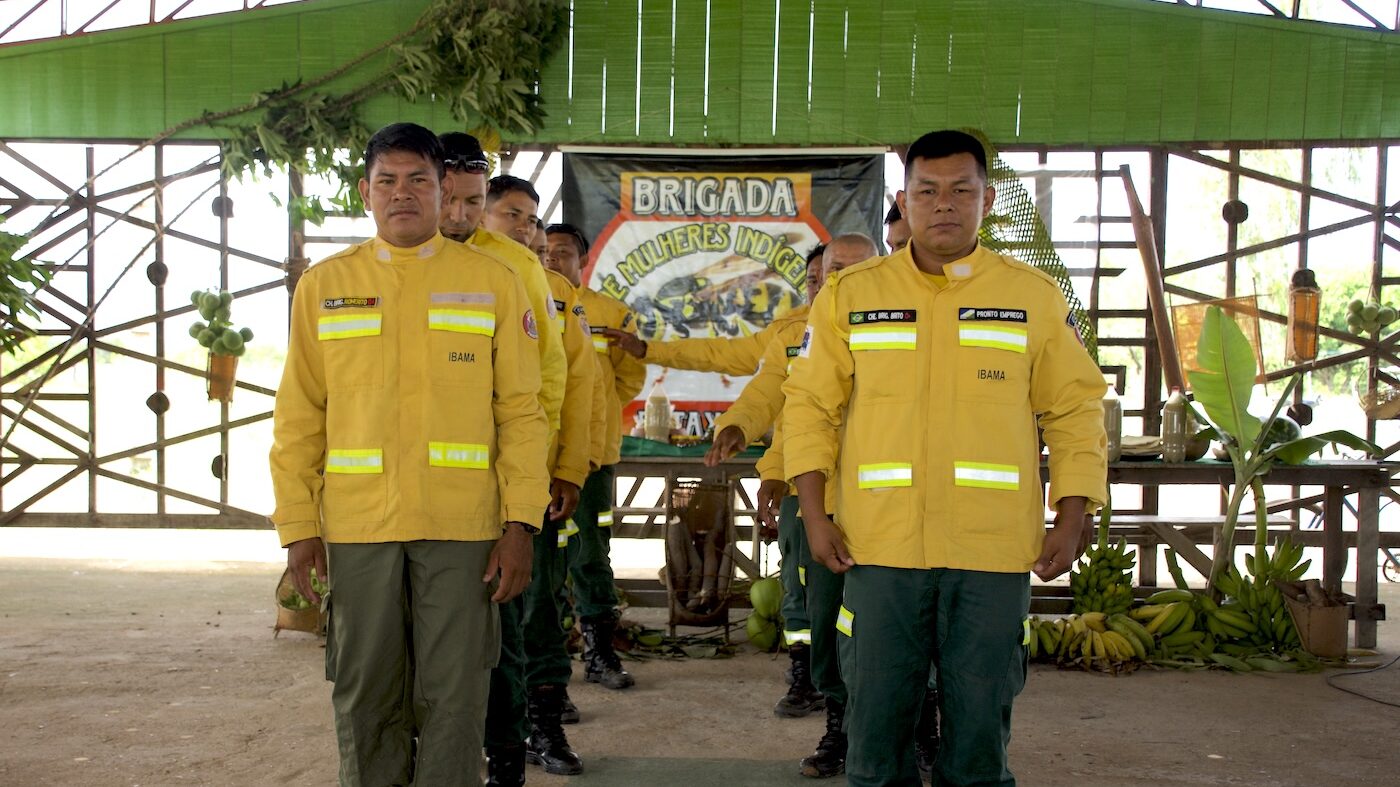
In 2025, RFUS supported Brazil’s Indigenous Council of Roraima’s firefighting, monitoring, and fire prevention work, which emphasizes prescribed burns to reduce the risk of uncontrolled fire. RFUS also organized a cross-border knowledge exchange in the Brazilian state of Roraima, which brought together Indigenous representatives from Peru and Brazil to share experiences and practical approaches to territorial fire management and climate resilience.