Dear Friends,
As I reflect on 2025, I am struck by both the scale of the challenges facing the world’s rainforests and the growing strength of the Indigenous-led movements working to protect them.
From deforestation and environmental crime to shifting political landscapes and an increasingly warming climate, Indigenous peoples across the Amazon and beyond have continued to confront intensifying pressures. Yet they’ve also continued to demonstrate what decades of scientific evidence has made clear: Indigenous peoples are the most effective stewards of the world’s tropical forests.
At Rainforest Foundation US (RFUS), we are proud to support Indigenous-led forest protection from the local to the global level. On the ground, we partner with Indigenous communities and organizations to strengthen land rights, expand territorial monitoring, and build organizational capacity. In 2025, we supported our partners to strengthen land tenure security for over 2 million acres of Indigenous lands, trained and financed more than 400 community-based forest patrollers protecting nearly 20 million acres of rainforest, and unlocked more than $10.5 million in funding for Indigenous-led forest protection efforts.
Protecting forests effectively and sustainably requires more than responding to immediate threats. Lasting impact depends on organizations that have the skills, systems and resources to address the wide variety of challenges their communities face every day. That’s why, beyond supporting immediate land rights and forest protection outcomes, we invest in Indigenous institutions that make long-term stewardship possible. In 2025 we worked with 22 Indigenous organizations across Central and South America to bolster their governance, administration, and fundraising capacity so they can access and manage funding on their own terms. Because building strong institutions takes time, our approach is rooted in long-term partnerships that establish trust and create resilient organizations capable of protecting forests for generations.
Getting adequate funding directly to the Indigenous organizations and communities doing the day-to-day work of protecting forests is essential to preventing the worst effects of climate change. Alongside Indigenous leaders and global allies, we helped shape emerging international climate finance mechanisms, such as the Tropical Forest Forever Facility (TFFF), advocating for increased direct funding and ensuring Indigenous peoples are represented in decisions that affect their territories and futures. This work culminated in a significant win: At least 20% of TFFF-generated resources have been committed to reaching Indigenous peoples and local communities.
By working on the ground and on the global stage, and by supporting both immediate action and long-term institutional strength, we are helping shift resources and decision-making power closer to the communities best equipped for protecting the forests on which we all depend.
The achievements highlighted in this report all took place in 2025, but they are the result of relationships, investments, and shared commitments we have forged over many years—and in some cases, decades. At RFUS, we know that lasting change rarely happens quickly. It is made possible through sustained support and the relentless determination of the Indigenous communities and organizations working everyday to sustain their forests.
None of this would have been possible without the ongoing generosity of supporters like you. Thank you for standing with Indigenous peoples as they protect rainforests, strengthen their communities, and help build a more just and sustainable future.

Together for rainforests,
Suzanne Pelletier
Executive Director
Supported communities to strengthen land tenure security for over 2 million acres.
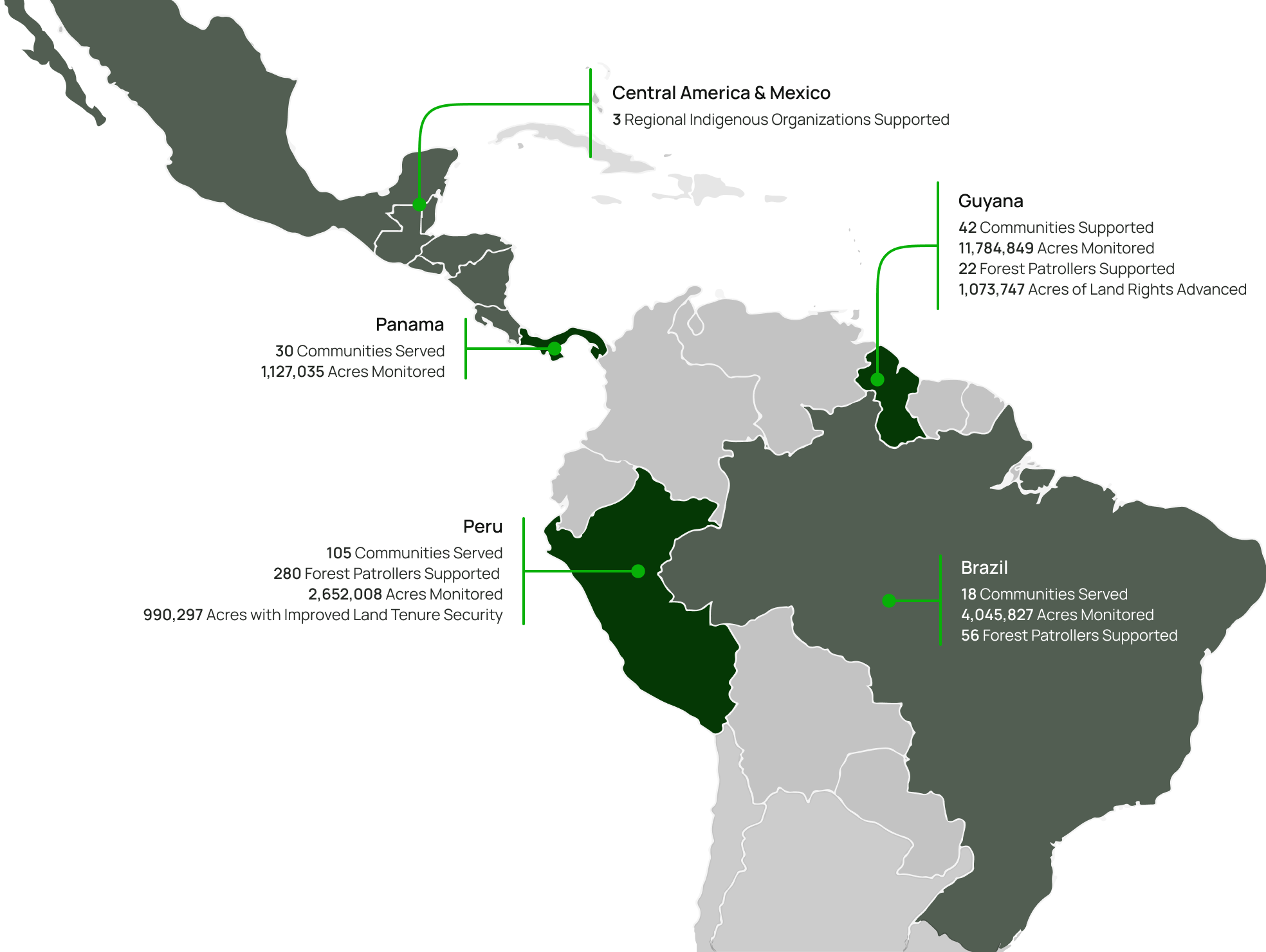
Trained and financed over 400 community-based patrollers to monitor and protect 19.6 million acres of their lands across Brazil, Peru, Guyana, and Panama using RFUS’s tech-enabled monitoring program—Rainforest Alert.
Unlocked over $10.5 million in funding from around the world to fuel Indigenous communities’ forest protection work.
Indigenous land rights are essential for community wellbeing and cultural preservation and are among the most effective and durable tools available for protecting tropical forests. Yet securing legal recognition can take years, requiring sustained engagement across multiple levels of government and civil society. RFUS works alongside Indigenous organizations throughout this process, helping communities secure and defend their ancestral territories while strengthening the local institutions responsible for their stewardship.
Photo: Marita Domper / ORPIO
When Indigenous peoples have the tools they need to monitor and manage their territories, they are better able to identify threats and respond effectively. Through mapping, land-use planning, and community forest monitoring programs such as Rainforest Alert, RFUS supports Indigenous-led systems that pair technology with territorial governance, helping communities turn information into action.
Photo: Mauricio Velez / RFUS
Indigenous organizations are essential to the long-term protection of tropical forests. They do the hard work to strengthen land rights, manage territories, advocate for their communities, and increasingly receive and manage climate funding directly. RFUS supports Indigenous organizations on multiple levels in developing the administrative and technical capacities needed to sustain their work, expand their impact, and ensure that Indigenous leadership remains at the center of forest protection for the long term.
Photo: Gabriela Delgado / RFUS
Photo: Daniel Tuesta / RFUS
Research has consistently shown that securing Indigenous peoples’ land rights is among the most cost-effective ways to protect forests, reduce illegal activities, and sustain biodiversity. Where communities hold formal rights to their territories, deforestation rates are lower, governance is stronger, and cultural systems are more resilient.
In 2025, Rainforest Foundation US (RFUS) supported Indigenous partners in Peru in strengthening land tenure security across 990,297 acres and securing legal titles for 67,762 acres of their lands. These successes are linked to SI-TIERRA, an innovative land tenure initiative that demonstrates what coordinated implementation can achieve. By investing in Indigenous organizations’ operational capacity and providing sustained field-level support, the SI-TIERRA model helps overcome the logistical and administrative barriers that often delay land titling. In Loreto, this approach has reduced processing timelines from several years to just 8–18 months while lowering implementation costs. The political commitment of regional authorities, including the Regional Management of Agrarian Development and Irrigation (DIRDAGRI) and the Regional Government of Loreto (GOREL), has been a critical factor in this success.
Additionally, with support from Rainforest Trust and GOREL, RFUS and the Interethnic Association for the Development of the Peruvian Amazon (AIDESEP) launched a two-year project to title and protect approximately 550,000 acres of rainforest in the Chambira-Marañón region—an area nearly three times the size of New York City. The goal is to advance land tenure security for around 41 Urarina communities who have inhabited the Chambira and Marañón river valleys for centuries.
Photo: Daniel Tuesta / RFUS
Photo: Sebastian Castañeda / RFUS
Photo: Daniel Tuesta / RFUS
SI-TIERRA demonstrates that, when resources and support reach those doing the hard work on the ground, public-private partnerships between Indigenous organizations and regional governments can deliver remarkable results and advance national climate commitments.
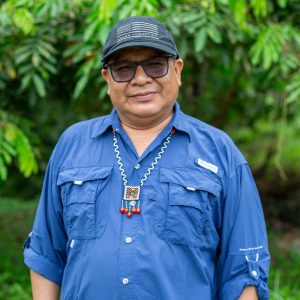
Suzanne Pelletier
Executive Director, RFUS
Jorge Pérez Rubio
President, AIDESEP
Photo: RFUS
Photo: RFUS
Photo: RFUS
For generations, the Patamona and Macushi peoples of Guyana’s North Pakaraimas Mountains have managed and cared for a vast ancestral territory of tropical savannah and rainforest. While portions of this territory are legally titled, large areas remain without formal recognition, leaving them more vulnerable to external pressures and limiting communities’ ability to secure their rights.
With support from RFUS, the North Pakaraimas District Council (NPDC) took important steps toward addressing this gap in 2025. Several villages finalized proposed boundaries for title extensions that would expand the area of recognition of their ancestral lands, building on years of community-led mapping and planning. Paramakatoi Village formally submitted a request to extend legal recognition across approximately 625,000 acres of lands and forests used by all the communities of the North Pakaraimas, including the site of Moruwa Village.
These efforts are part of NPDC’s broader “One Block” vision: the idea that the ancestral territory of the Patamona and Macushi peoples should be recognized and protected as a single interconnected landscape rather than as a patchwork of individually titled villages. While most villages are located in the savannahs, communities collectively rely on the rainforests that lie between them for hunting, fishing, gathering, and other cultural and spiritual practices. Recognizing that these forests are shared by all communities—and that their protection requires collective action—RFUS supported NPDC to finalize a management plan for the region’s Shared Use Areas and developed a communications strategy to build understanding of, and support for, the One Block vision.
By the end of 2025, NPDC had built momentum for a broader Indigenous-led movement to strengthen land rights across more than 2.7 million acres of ancestral lands—an area larger than Rhode Island and Delaware combined. In 2026, this work will expand significantly as NPDC travels to every village in the district to build support for the One Block vision and bring communities together to protect the Shared Use Areas from land invasions and deforestation.
As Indigenous peoples and local communities push for a greater role in shaping global climate solutions, nearly 300 representatives from the world’s major tropical forest regions gathered in Brazzaville, Republic of Congo, from May 26–30, 2025 for the First Global Congress of Indigenous Peoples and Local Communities from the Forest Basins. Convened by the Global Alliance of Territorial Communities (GATC)—a long-standing partner of RFUS—and the Rights and Resources Initiative (RRI), the Congress brought together forest guardians from the Amazon, Congo, Borneo-Mekong-Southeast Asia, Central America, and Mexico.
At the Congress, Indigenous peoples and local communities called for greater visibility, stronger land rights, and direct access to climate finance. They urged an end to extractive models that decimate ecosystems and harm communities, demanding instead a future where humanity lives with nature, not in opposition to it, stating: “The answer is us—all of us.”
RFUS worked closely with the GATC to support programming for this historic event, which included sessions on identifying key land tenure priorities for Indigenous peoples and local communities across the tropical forest basins. These conversations built on a broader global co-design process that continued throughout the year, contributing to major outcomes at COP30, the United Nations Climate Change Conference, including a global commitment to secure nearly 400 million acres of Indigenous and community lands by 2030, and stronger Indigenous peoples’ participation in the Tropical Forest Forever Facility (TFFF).
Photo: Tukumã Pataxó/APIB
Photo: RFUS
In 2025, RFUS supported Indigenous communities to monitor and protect over 19.6 million acres of rainforest—an area larger than Ireland—using Rainforest Alert, RFUS’s tech-enabled monitoring methodology.
This effort included investing in “train the trainer” models, where local Indigenous leaders and technical staff were taught how to train communities on key advocacy and monitoring activities. Through these efforts, RFUS equipped over 400 community-based forest patrollers across more than 160 communities in Peru, Brazil, Guyana, and Panama.
One of the most significant expansions took place in Peru, where 291 monitors patrolled over 2.6 million acres of rainforest in 2025—up from 1.1 million acres the year prior. Rainforest Alert was scaled up to 19 sub-communities of the broader Matsés Native Community, as well as nine communities affiliated with the Federation of Native Communities of the Tapiche River (FECORITAY).
RFUS also supported the monitoring and protection of over 11.7 million acres of rainforest in Guyana, 1.1 million acres in Panama, and 4 million acres in Brazil.
In most regions, monitoring is embedded within Indigenous governance structures. Monitors report their findings to community assemblies, which determine how to respond to threats. When communities decide to pursue formal action, RFUS can provide support to ensure complaints reach the appropriate authorities.
Photo: RFUS
Photo: Fernando Urdapilleta
Monitoring is not an end in itself. The goal is to ensure that communities have the information they need to defend their territories through their own governance systems. As more Indigenous organizations expand their monitoring programs, they are leading forest protection in areas that have historically received little oversight and are therefore especially vulnerable to illegal activity.
Wendy Pineda
General Project Manager, RFUS
Photo: RFUS
Photo: Billy Torres / ORAU
Photo: RFUS
What happens after an Indigenous monitor documents illegal logging, mining, or incursions in their territory?
For many communities, identifying a threat is only the beginning. Responding to it often requires filing formal complaints and navigating government agencies to pursue legal action, all while generating additional evidence to support the case. In some instances, it can even expose Indigenous leaders and defenders to significant personal risk.
In Peru, RFUS co-organized a TechCamp and a series of Traveling School workshops focused on environmental crimes. Together, these activities helped Indigenous organizations better understand the legal and institutional pathways available when communities choose to take action on threats identified through monitoring. Participants worked through real-world cases involving illegal logging and mining and learned how to develop and file formal environmental complaints based on the evidence they collect.
In Guyana, monitoring data collected by Indigenous teams in the Upper Mazaruni region informed efforts by the community of Jawalla to address a mining concession that overlaps with its traditional territory. Additional drone mapping conducted in 2025 helped clarify discrepancies between officially granted Indigenous land boundaries and poorly mapped versions of the boundaries that were entered into government databases, generating evidence to support the community’s case.
The risks associated with this work are real. Across the world, Indigenous leaders and environmental defenders continue to face intimidation and violence for protecting their territories and reporting environmental crimes. According to Global Witness, an estimated 146 land and environmental defenders around the world were killed or disappeared in 2024. Despite making up just 6% of the global population, Indigenous peoples accounted for roughly one-third of those murdered.
In Peru, RFUS continued supporting the widows and families of four Ashéninka leaders from the community of Saweto who were murdered in 2014 after years of denouncing illegal logging in their territory. Over the past decade, RFUS helped secure legal representation and supported advocacy efforts to keep the case visible as the families pursued justice. In 2025, a Peruvian appeals court upheld prison sentences against the men convicted of the killings, marking a major step toward justice.
Monitoring can reveal what is happening in a territory, but lasting change depends on the people willing to act on that information. RFUS supports Indigenous partners not only in documenting threats, but also in accompanying the leaders and communities who undertake the often lengthy and sometimes dangerous work of defending their territories and rights, while supporting communities in finding ways to reduce risks.
Across the Amazon, climate change and deforestation are driving increasingly severe fires, floods, and droughts. As climate mitigation and adaptation become increasingly intertwined, Indigenous Peoples are adapting long-standing knowledge and practices to protect their territories and communities.
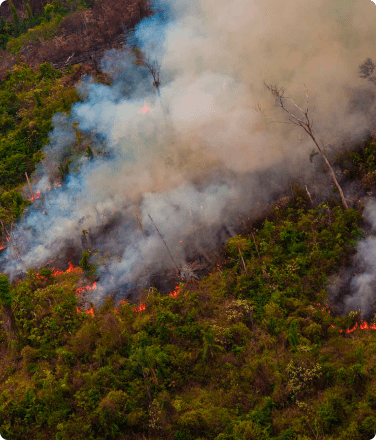
In Roraima, Brazil’s northernmost state, Indigenous peoples are building on generations of fire management knowledge to strengthen prevention and response efforts. For centuries, “good fire” has been used to replenish soils and vegetation and repel pests and predators. Today, that knowledge is helping communities adapt to a changing climate and increasingly severe uncontrolled fires.
Indigenous communities in Roraima have increasingly joined government-supported fire brigades while establishing their own community-based brigades. The Indigenous Council of Roraima (CIR), an organization representing over 70,000 Indigenous people and a decades-long partner of RFUS, has led efforts to organize these Indigenous-led brigades. Among them is the Pataxibas, an all-women fire brigade composed of 14 firefighters from five Indigenous territories. In 2025, RFUS supported the brigade’s work in fire prevention, firefighting, and environmental education, alongside prescribed burns to reduce the risk of uncontrolled fire.
Meanwhile, in Peru, RFUS partnered with the Inter-Ethnic Association for the Development of the Peruvian Rainforest (AIDESEP) to facilitate an event in Moyobamba, bringing together delegations from more than eight Indigenous peoples—including the Kichwa, Ticuna, and Wampís—to exchange knowledge and co-create a strategy for strengthening community climate resilience.
Bringing together Indigenous women leaders, technical experts, and representatives from local organizations, the gathering focused on urgent priorities, including preventing and controlling fires, strengthening territorial governance, advancing Indigenous-led economies, and securing direct access to climate finance. It culminated in a draft National Strategy for Indigenous Adaptation to Fires, Droughts, and the Climate Crisis.
Photo: CIR
Photo: CIR
Photo: AIDESEP
For us, exchanging knowledge among different communities and Indigenous peoples is essential. Each community has their own perspective, way of thinking, and way of living. By sharing and communicating, we can prevent large-scale damage from fires and droughts.
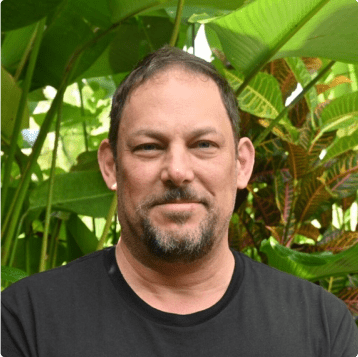
Francisco Hernández Cayetano
President, Federation of Ticuna and Yahuas Communities of Bajo Amazonas (FECOTYBA)
Photo: RFUS
Photo: RFUS
Photo: RFUS
Photo: RFUS
Rising gold prices have intensified pressure on Indigenous territories across the Amazon. In Guyana, communities are facing growing impacts from an influx of miners, many of whom crossed the border from Brazil following increased enforcement efforts in Indigenous territories there. While gold mining is not new in Guyana, recent expansion has led to spikes in malaria cases and exacerbated problems such as mercury contamination, deforestation, wildlife trafficking, and public health and security concerns.
For many Indigenous communities in Guyana’s interior, mining remains one of the few available sources of income. Yet while the economic benefits are often concentrated among outside investors and a small number of local actors, the environmental, cultural, and social costs are borne by entire communities.
To help communities respond to these growing challenges, RFUS continued supporting three Indigenous district councils—the South Rupununi District Council (SRDC), the North Pakaraimas District Council (NPDC), and the Upper Mazaruni District Council (UMDC)—to bolster their territorial patrolling and develop strategies to protect their lands and resources. These efforts led to the arrest of several individuals operating illegal mining operations and the decommissioning or seizure of associated equipment.
In 2025, through a partnership with Harvard and Purdue Universities, RFUS supported SRDC to acquire specialized equipment to measure mercury in soils and commonly consumed fish. The initiative is helping communities better understand the impacts of mining on local food systems and make informed decisions regarding mining in their territories. SRDC is now expanding this support to other Indigenous territories across Guyana.
RFUS also provided technical support to UMDC for drone mapping related to a mining concession that was illegally granted on community lands. In addition, we supported SRDC and NPDC in developing territorial management plans designed to safeguard culturally significant areas, forests, and headwaters from the impacts of mining.
At the national level, RFUS supported Indigenous leaders in engaging government authorities to address illegal mining activities. These efforts contributed to an ongoing collaboration with the Guyana Geology and Mines Commission, resulting in multiple enforcement operations targeting illegal mining equipment and activities in Indigenous territories.
Photo: Norly Meza
Climate finance can only protect forests if it reaches the communities who have long cared for them and does so in ways that strengthen their rights, priorities, and leadership. In 2025, RFUS supported Indigenous peoples and local community partners to shape climate finance systems so the funding reaching the ground is not only greater, but more accessible, accountable, and fit for purpose.
In early 2025, RFUS’s long-standing partner, the Global Alliance of Territorial Communities (GATC), was approached to co-design an Indigenous peoples and local community direct finance mechanism with the Government of Brazil and the World Bank for the Tropical Forest Forever Facility (TFFF). The TFFF is a new global initiative, formally launched at COP30 in Brazil, designed to provide long-term, results-based payments to tropical forest countries based on their success in maintaining standing forests.
RFUS worked closely with the GATC, World Bank, and Government of Brazil to establish a working group and Global Steering Committee to quickly advance a co-design process in advance of COP30. That co-design process led to successfully securing a commitment that at least 20% of TFFF-generated resources will be directed to Indigenous peoples and local communities and the inclusion of a global Indigenous Peoples and Local Community Advisory Council in the formal governance structure. RFUS also supported GATC’s engagement in shaping the global mechanism through which TFFF funds will be channeled.
This year, RFUS also supported efforts to strengthen the participation and rights of Indigenous peoples and local communities in jurisdictional REDD+ carbon markets. We facilitated a working group of partners to participate in the public consultation of the ART TREES standard, a leading framework used to certify large-scale forest carbon credit programs at the jurisdictional level. Participants provided concrete recommendations to improve early community consultation, effective participation, and verification of programs. These recommendations culminated in a formal submission endorsed by 30 representative Indigenous, local community, and rights-based organizations worldwide.
RFUS also co-published a case study with the Asociación de Comunidades Forestales de Petén (ACOFOP), one of our partners from Guatemala, showcasing how effective participation of Indigenous peoples and local communities can help ensure that the financial benefits generated by carbon programs are distributed fairly and transparently among participating communities and other stakeholders.
Learn more about how RFUS is supporting Indigenous partners in using forest carbon data to democratize climate finance initiatives.
Photo: Than Pataxó/GATC
Photo: Daniela Arias
Photo: RFUS
Photo: RFUS
The TFFF represents an important opportunity to reshape how climate finance reaches Indigenous peoples and local communities. Our goal is not simply to increase funding, but to ensure that Indigenous peoples have a meaningful role in designing and governing these mechanisms and that new financial flows strengthen the existing representative organizations and network of territorial funds.

Joshua Lichtenstein
Policy Director, RFUS
Photo: Fernando Urdapilleta
Photo: RFUS
Photo: RFUS
In Guyana, a decade-long partnership between RFUS, the Amerindian Peoples Association (APA), and the South Rupununi District Council (SRDC) demonstrates how sustained investment in Indigenous organizations can create lasting pathways to direct funding and stronger territorial governance.
In 2025, a major ten-year funding cycle supported by Norway’s International Climate and Forest Initiative/Norwegian Agency for Development Cooperation (NICFI/Norad) came to a close, marking an important milestone in this long-term collaboration. Since 2015, RFUS has worked alongside APA and SRDC to provide multi-year funding and sustained support to strengthen organizational systems, donor engagement, and long-term institutional capacity, as well as extensive work on land rights, monitoring and forest protection. This long-term partnership has helped build the internal foundations required for both organizations to successfully manage funding independently. Over the course of the partnership, RFUS facilitated approximately $7 million in combined direct and intermediated funding from donors including NICFI/Norad, the Swedish Postcode Foundation, Nia Tero, and the Samueli Family Foundation.
The results have been transformative. APA, an Indigenous-led organization based in Georgetown, Guyana, expanded from five staff members in 2015 to 15 full-time employees working across governance, mapping, advocacy, communications, and finance. Over the course of ten years, its annual budget has increased from $153,000 to $1.7 million. SRDC, an Indigenous representative organization in southern Guyana, similarly evolved from a small grassroots organization with two staff members into an institution with 12 full-time staff. It now has a $1.1 million annual budget supporting territorial monitoring and advocacy efforts.
Today, both organizations independently manage major direct grants from international donors, while RFUS’s role has evolved into one of strategic support and technical collaboration.
The best intermediary is able to adapt to partners’ evolving needs. Our role is to strengthen the institutional foundations Indigenous organizations need to access and manage funding directly on their own terms.
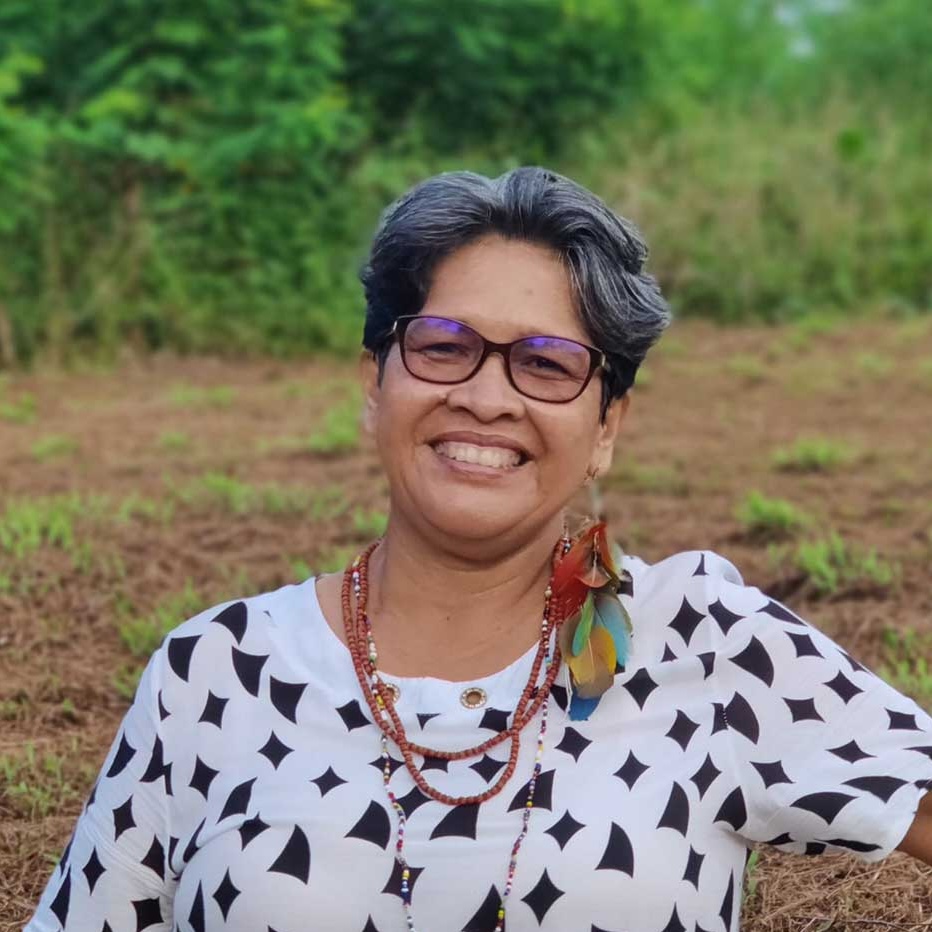
Victor Gil
Capacity Strengthening Senior Program Manager, RFUS
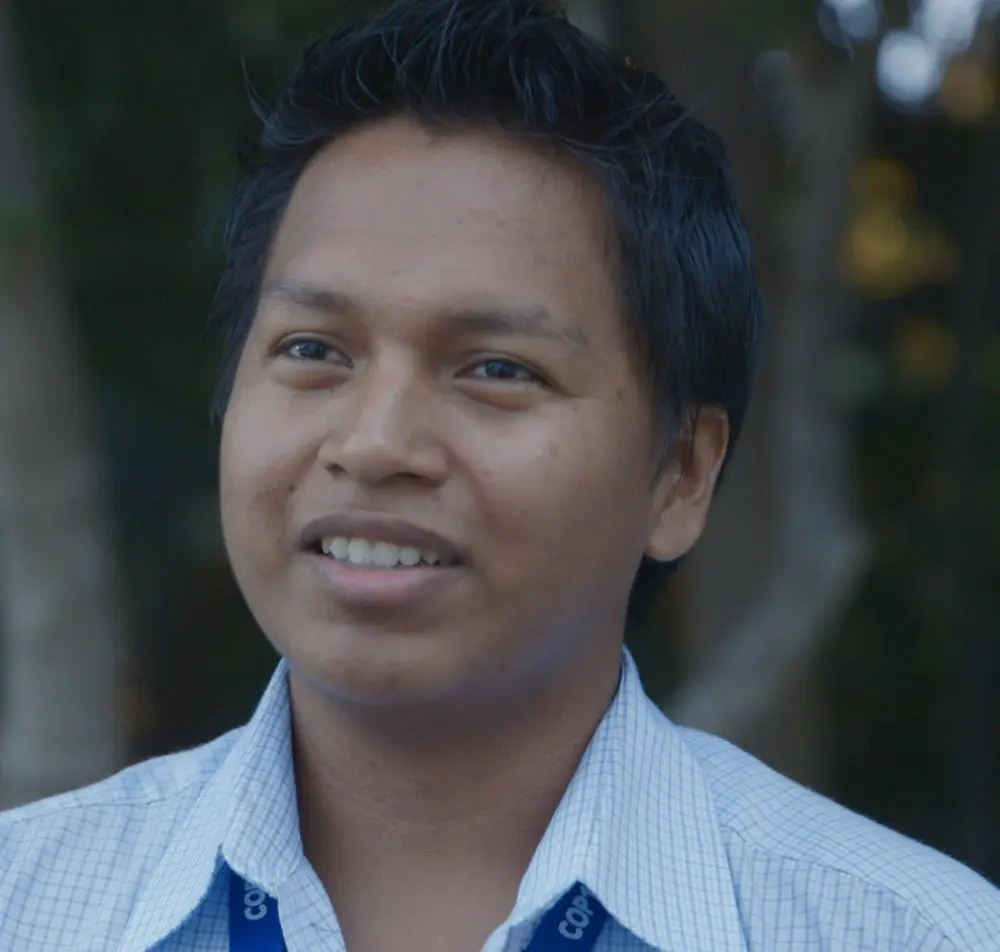
The APA greatly values the partnership and collaboration with Rainforest Foundation US. With the NORAD funding, we were able to carry out activities that strengthened the capacities of Indigenous peoples in various areas and secured and preserved key aspects of Indigenous peoples’ rights.
Jean La Rose
Executive Director, APA
This partnership is one of four case studies featured in Contributing to a More Resilient Direct Funding Ecosystem for Indigenous Peoples and Local Communities: Case Studies on Intermediary Support, an RFUS report examining how long-term partnerships can help Indigenous organizations strengthen institutional capacity, access direct funding, and advance their own priorities.
GeoIndígena was founded by Indigenous technicians in Panama who recognized a gap: Indigenous peoples need not only strong representative organizations, but also Indigenous-led technical expertise to map territories, monitor forests, and generate evidence to support land rights claims.
RFUS supported the founders of GeoIndígena for years before its incorporation in 2020 and has continued investing in its growth since then. In 2025, that support focused on strengthening the institution itself. Together, we finalized GeoIndígena’s strategic plan, revamped its public-facing communications through a website overhaul and new outreach materials, and supported its engagement with donors, peers, and allies ahead of COP30.
RFUS also helped facilitate new funding that will allow GeoIndígena to expand its territorial monitoring methodology to Honduras. These investments are helping strengthen GeoIndígena’s position as a leading Indigenous-led technical organization while creating new opportunities for Indigenous technicians to strengthen territorial protection efforts and train a new generation of technicians across the region.
By supporting organizations like GeoIndígena, RFUS is helping ensure that the people with the deepest knowledge of their territories are also the ones generating the data, maps, and evidence used to protect them.
Photo: RFUS
Photo: RFUS
Photo: RFUS
The maps of the past were created to colonize our territories; today, we create maps that contribute to their decolonization and formal recognition.

Carlos Doviaza
Director of Programs, GeoIndígena
Articulação dos Povos Indígenas do Brasil (APIB)
Conselho Indígena de Roraima (CIR)
Associação Wanasseduume Ye’kwana (SEDUUME)
Associação dos Povos Indígenas Wai Wai do Xaary (APIWX)
Associação Indígena Wai Wai da Amazônia (AIWA)
Instituto Socioambiental (ISA)
Associação Terra Indigena do Xingu (ATIX)
Hutukara Associação Yanomami
Alianza Mesoamericana de Pueblos y Bosques (AMPB)
Coordinadora de Mujeres Líderes Territoriales Mesoamericanas (CMLT)
Asociación de Forestería Comunitaria Utz Che (Utz Che)
Asociación de Comunidades Forestales de Petén (ACOFOP)
Red Mexicana De Organizaciones Campesinas Forestales (Red Mocaf)
Federación de Productores Agroforestales de Honduras (FEPROAH)
Moskitia Asla Takanka (‘Unity of La Moskitia’, MASTA)
Amerindian Peoples Association (APA)
South Rupununi District Council (SRDC)
North Pakaraimas District Council (NPDC)
Upper Mazaruni District Council (UMDC)
Moruca District Council (MDC)
Patamasan Protectors of I’na Pata (PPIP)
GeoIndígena
Congresso Nacional del Pueblo Wounaan (CNPW)
Congreso General de Tierras Colectivas Emberá y Wounaan (CGTCEW)
Consejo General de la Comarca Naso Tjër Di
Asociación Interétnica de Desarrollo de la Selva Peruana (AIDESEP)
Organización Regional de los Pueblos Indígenas del Oriente (ORPIO)
Organización Regional de AIDESEP-Ucayali (ORAU)
Federación de Comunidades Nativas del Medio Napo, Curaray y Arabela (FECONAMNCUA)
Federación de Comunidades Tikuna y Yahuas del Bajo Amazonas (FECOTYBA)
Organización Kichwa Runa Wankurina del Alto Napo (ORKIWAN)
Federación del Pueblo Yagua del Río Apayacu (FEPYRA)
Federación de Comunidades Nativas Maijuna (FECONAMAI)
Federación de Comunidades Nativas del Río Tapiche (FECORITAY)
Asociación Matsés
Coordinadora de las Organizaciones Indígenas de la Cuenca Amazónica (COICA)
Global Alliance of Territorial Communities (GATC)
GATC Women’s Movement
Confederación de Nacionalidades Indígenas de la Amazonía Ecuatoriana (CONFENIAE)
Director of Equator Group
Retired Finance Executive
Founder, Lin Lane; Partner, The Fund
Distinguished Professor & the Nicholas Doman Professor of International Law, University of Colorado Law School
Policy & Advocacy Coordinator, Indigenous Peoples Rights International
Managing Partner, Wealth Partners Capital Group, LLC
Partner, Simpson Thacher & Bartlett LLP; Member Executive Committee (founding Chair), The Cyrus R. Vance Center for International Justice
Principal & Managing Director, Stone Arch Group
Senior Product Manager, Bloomberg
Your support has helped to strengthen Indigenous peoples and their organizations as they protect their territories, defend their rights, and address the growing impacts of climate change. Together, we are investing in leadership, institutions, and partnerships that make lasting forest protection possible. Thank you for making this work possible!
Rainforest Foundation US is committed to the highest standards of moral and ethical behavior and employs specific practices to combat the risk of financial irregularities. RFUS policy requires internal controls to prevent financial irregularities, including authorization, segregation of duties, reconciliation, monitoring, and safeguarding of assets in accordance with best practices. Additionally, all RFUS employees are encouraged to report any known or suspected financial irregularities, and have access to do so anonymously as outlined in our whistleblower policy.
Over the next five years, Rainforest Foundation US will deepen and expand partnerships with Indigenous peoples and local communities across Central and South America to achieve lasting, measurable impact. We will work with partners in Brazil, Peru, Guyana, Ecuador, Panama, and across Mesoamerica to:
Discover the fascinating secrets of the Amazon!
Our new Kids’ Corner is full of new games, activities, and learning materials to help kids explore the rainforest—and see how they can help protect it.
CREDO Mobile is donating a portion of their revenue this month to three organizations, and Rainforest Foundation US is one of them!
The more votes we get, the bigger our share of funding to protect vital rainforest ecosystems.
Your vote is powerful and FREE.