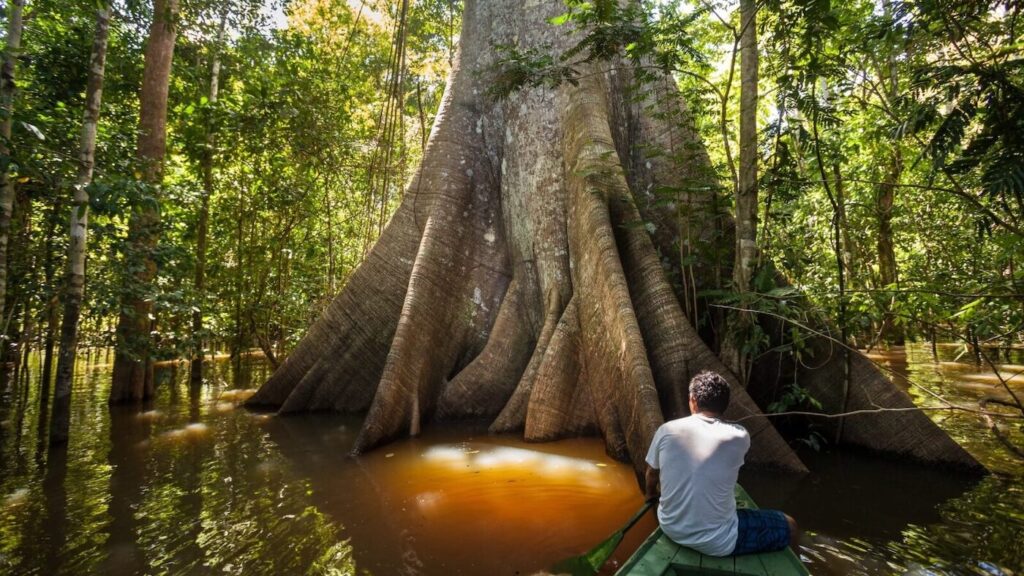
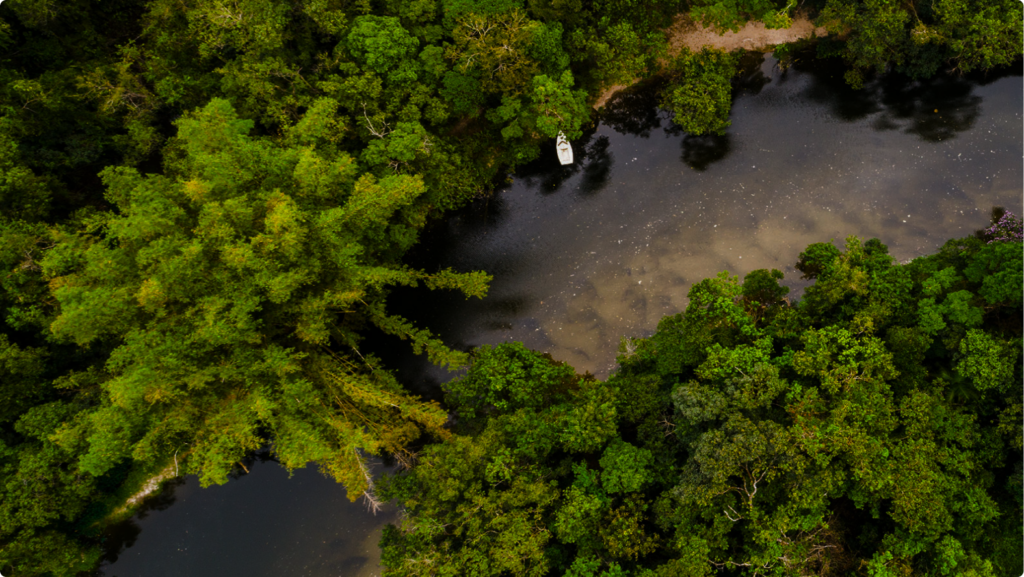
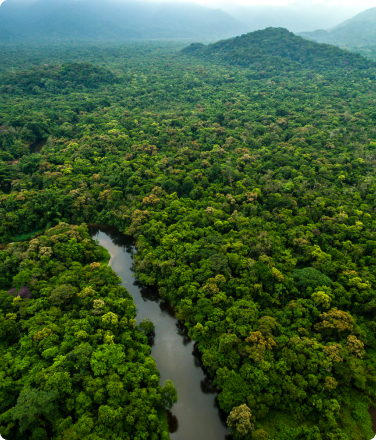
The Amazon is the largest tropical rainforest in the world, spanning over 1.7 billion acres across nine countries. At this immense scale, it is one of our planet’s primary carbon sinks, and a crucial defense against climate change.
The Amazon is the largest tropical rainforest in the world, spanning over 1.7 billion acres across nine countries. At this immense scale, it is one of our planet’s primary carbon sinks, and a crucial defense against climate change.
But this vital ecosystem is under threat. Protecting the Amazon is a global priority for the future of our planet.
For more than 35 years, Rainforest Foundation US has partnered with Indigenous peoples to protect the Amazon rainforest.
Our journey began in 1988 in Brazil, where we stood with the Kayapo people to secure the demarcation of their ancestral lands—the vast Menkragnoti territory. Today, our work in the Amazon spans four countries, supporting nearly 200 communities across the basin.
How Do We Help Protect the Amazon?
Securing the Amazon’s future is a monumental and complex task. Threats vary from region to region, ranging from illegal mining and logging to oil extraction. But wherever they arise, Indigenous peoples are on the frontlines, as they have been for centuries, defending their territories at great personal risk.
We partner with Indigenous peoples across the Amazon to support their efforts, by working alongside them to build systems that recognize and uphold their rights, center their voices in decision-making, and enable them to defend their territories over the long term. We are proud to have worked alongside some of our Indigenous partner organizations for decades.
Our work in the Amazon focuses on three closely linked priorities:
Land Rights
Indigenous peoples are the most effective forest defenders. When their lands are mapped and legally recognized, they are better able to defend their territories from threats such as illegal logging, mining, and land grabbing.
We support communities to manage, monitor, and protect their forests using technology, governance systems, and climate resilience strategies, including fire brigades to respond to the increasing risk of fires.
Strong Indigenous-led organizations are key to the durable protection of the Amazon. We invest directly in partner organizations to strengthen their governance, advocacy, and operational capacity.
Secured Indigenous peoples’ land rights across 42.7 million acres since 1988
200
Directly support ~200 communities across the Amazon basin
18 Million
Support the protection of over 18 million acres of rainforest each year through Indigenous-led monitoring
Why is the Amazon Rainforest Important?
Covering an area comparable in size to the continental United States, this vast biome is home to an astounding share of our planet’s biodiversity and freshwater, and is crucial for maintaining the global ecological balance necessary for a livable planet.
As one of the Earth’s primary carbon sinks, the Amazon absorbs vast amounts of carbon dioxide (100 million metric tonnes annually). It plays a vital role in regulating the climate and mitigating the effects of climate change.
The Amazon is also central to our planet’s water systems. Its vast river basin—the largest in the world—discharges 15% of the world’s freshwater into the ocean, and significantly influences rainfall patterns in South America and worldwide. Each day, the Amazon rainforest releases billions of tons of water vapor into the atmosphere—often described as “flying rivers.” Scientists have found that large-scale deforestation in the Amazon could disrupt weather patterns at a massive scale, reducing rainfall even in distant regions, including parts of North America.
Approximately 25% of modern medicines are derived from rainforest plants, many found in the Amazon. Researchers continue to discover more than 100 new species there each year, and estimate that over 80% remain undocumented in Western science. This makes the Amazon one of the world’s largest living datasets, with vast potential for medicine and biotechnology.
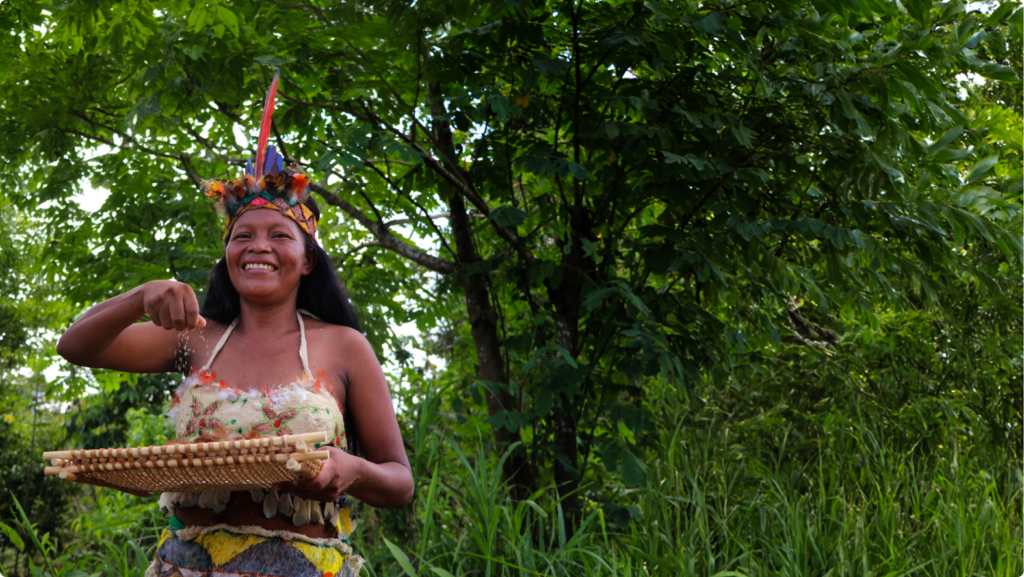
Beyond its ecological importance, the Amazon is home to 45 million people, including hundreds of distinct Indigenous peoples. Over thousands of years, human relationships with the forest have shaped immense cultural diversity and generated invaluable ecological knowledge that we cannot afford to lose.
The fate of the Amazon rainforest is inseparable from our own.
Indigenous Peoples are the Best Protectors of the Amazon
The Amazon is home to approximately 1.5 million Indigenous people from 385 different ethnic groups.
Contrary to the common perception of the Amazon rainforest as untouched wilderness, Indigenous peoples have shaped and managed these forests for thousands of years. Indigenous communities steward about 28% of the total Amazon rainforest, an area larger than Mexico and France combined, though many still lack legal recognition of their territories.
Multiple studies have demonstrated that forests managed by Indigenous peoples are more biodiverse, experience less deforestation, and sequester more carbon than forests within any other conservation model, including national parks. Despite their crucial role in environmental stewardship, Indigenous peoples receive less than 1% of global climate funding. Meanwhile, they continue to face harassment, criminalization, and murder for defending their lands.
The Amazon is Nearing a Dangerous Tipping Point
We’ve already lost approximately 15% of the Amazon rainforest. Estimates say that if deforestation reaches 20-25% of the basin, this could trigger a large-scale dieback of the forest, leading to catastrophic consequences for rainfall patterns across South America and the global climate.
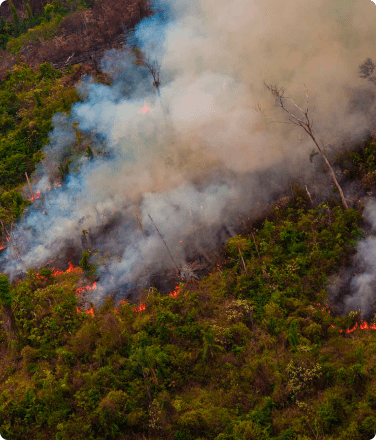
Tropical forests like the Amazon are naturally humid and rarely burn. Most fires in the Amazon are caused by humans, often set intentionally, to clear land for agriculture. As climate change and drought intensify, these fires are growing larger, spreading further, and becoming more destructive. In 2024, for the first time on record, fires became the leading cause of forest loss in the Amazon.
Climate change is intensifying extreme weather events across the Amazon. At least 38% of the forest has already been degraded by severe droughts, making human-induced fires even more dangerous. Scientists estimate that extreme drought events are now up to 30 times more likely due to climate change.
Every minute, the Amazon loses a forest area roughly the size of four soccer fields. Over the past 22 years, this has amounted to over 168.5 million acres of forest loss. The primary driver of this destruction is agricultural expansion, which accounts for a devastating 84% of deforestation, largely linked to cattle ranching and industrial agriculture.
Extractive Industries (Oil and Mining)
Mining operations, both legal and illegal, are present in all Amazonian countries, impacting 17% of the region. Oil blocks cover 9.4% of the Amazon (roughly 200 million acres), while record gold prices have accelerated the expansion of gold mining in the region. These activities drive deforestation and habitat destruction while also polluting waterways—endangering wildlife and Indigenous communities, and exacerbating climate change.
The future of the Amazon depends on strengthening Indigenous-led forest protection before this vital ecosystem reaches a point of no return.
Coalition of Indigenous Peoples of Brazil is the umbrella organization representing all Indigenous peoples of Brazil. Since 2005, APIB has led Indigenous peoples’ resistance to policies and programs that threaten rights and lands. RFUS partners with APIB on global advocacy, among other work, as part of the Global Alliance of Territorial Communities.
Indigenous Council of Roraima is the main representative Indigenous organization in the northern Brazilian Amazon state of Roraima. RFUS has partnered with CIR for some 20 years providing legal, financial, and strategic support for the demarcation of Raposa Serra do Sol, and ongoing human rights advocacy and initiatives.
COIAB
Coordenação das Organizações Indígenas da Amazônia Brasileira
Coordenação das Organizações Indígenas da Amazônia Brasileira
The Coordination of Indigenous Organizations of the Brazilian Amazon, founded in 1989, is the largest regional Indigenous organization in Brazil. COIAB’s mission is to defend Indigenous peoples’ rights to land, health, education, culture, and sustainability, aiming at their autonomy through political articulation and strengthening of Indigenous organizations.
Hutukara Yanomami Association was established in 2004 to represent the Yanomami people of the northern Brazilian states of Roraima and Amazonas. RFUS worked closely with Hutukara in its early days, providing capacity strengthening for the organization as it spread its wings, as well as supporting a younger generation of leaders. We have also been active in a number of Yanomami-led campaigns and initiatives over the years.
Amerindian Peoples Association is the leading Indigenous organization in Guyana. APA has active members in over 60 Indigenous villages and regional representatives across Guyana, as well as a national secretariat in Georgetown. RFUS partners with APA in their efforts to advocate for land rights and expanded titling, national policy change, and to strengthen local and regional Indigenous governance institutions.
South Rupununi District Council is the representative body of the elected Chiefs (“Toshaos”) of the 21 Wapichan communities in southern Guyana. RFUS supports SRDC to acquire title to the collective Wapichan area, protecting the headwaters of Guyana’s major rivers, addressing mining threats and securing the border with Brazil.
North Pakaraimas District Council is the representative body of the Patamona and Macushi Indigenous peoples. The NPDC holds title to roughly 333,284 hectares of village land–26% of their ancestral lands. RFUS supports NPDC in mapping the lands outside village boundaries and to determine the best way to conserve these lands in the face of expanding mining operations and other threats.
MDC
Moruca District Council
MDC
Moruca District Council
Moruca District Council is the representative body of eight Lokono villages in a coastal lowland environment with extensive forest resources, mangroves and coastal wetlands. The eight titled villages cover roughly 31% of the traditional lands of the MDC. RFUS and APA have been supporting institutional strengthening efforts, including developing rules of procedure for Village Councils and guidelines for implementing Free, Prior, and Informed Consent.
UMDC
Upper Mazaruni District Council
UMDC
Upper Mazaruni District Council
Upper Mazaruni District Council is the representative body of the Akawaio Indigenous people. Communities in the Upper Mazaruni are engaged in a legal case to secure collective title for the full extent of their territory at Guyana’s High Court since 1998, while the government continues to issue mining rights to outside miners over untitled traditional lands subject to the case, without their Free, Prior, and Informed Consent (FPIC). RFUS has assisted the UMDC in monitoring and analysis of the extent of mining operations in the region.
Partners in Peru
AIDESEP
Asociación Interétnica de Desarrollo de la Selva Peruana
Asociación Interétnica de Desarrollo de la Selva Peruana
The Interethnic Association for the Development of the Peruvian Forest is the spokesperson organization for the Indigenous peoples of the Amazon in Peru, which works for the defense and respect of their collective rights. AIDESEP has 109 federations that represent 1,809 communities where more than 650,000 Indigenous men and women live, grouped into 19 linguistic families.
ORPIO
Organización Regional de los Pueblos Indígenas del Oriente
Organización Regional de los Pueblos Indígenas del Oriente
The Organization of the Indigenous Peoples of the Eastern Amazon is the Indigenous peoples’ representative organization in the Amazonian department Loreto, Peru, representing 430 communities. ORPIO engages in protecting their territories, promoting human development, and defending their rights and Indigenous governance.
The Regional Organization Aidesep Ucayali represents 15 Indigenous peoples, 13 subnational federations. ORAU engages in promoting the economic, social, political, and cultural development of the Indigenous peoples that it represents.
Discover the fascinating secrets of the Amazon! Our new Kids’ Corner is full of new games, activities, and learning materials to help kids explore the rainforest—and see how they can help protect it.